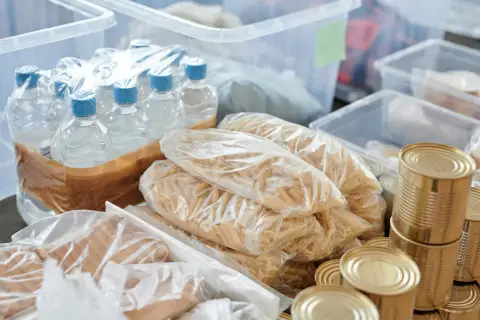
Food packaging requires more than basic protection. Fresh meat, dairy products, fruits, vegetables, and other perishable goods must be protected from contamination, moisture loss, oxidation, and physical damage throughout storage and transportation. As cold chain logistics and modern retail systems continue to develop, packaging materials need to provide reliable performance while meeting strict food safety requirements. A stretch film manufacturing machine plays an important role in producing high-performance food-grade stretch films with consistent quality, suitable mechanical properties, and adaptable structures for different preservation applications.
Challenges of Traditional Food Packaging Films
Traditional food packaging films often rely on single-layer structures, which can limit their ability to balance strength, transparency, sealing performance, and barrier properties. Different food products have different preservation requirements, making it difficult for conventional films to provide comprehensive protection.
For fresh meat and dairy products, packaging materials need to reduce oxygen exposure and maintain stable sealing performance during refrigerated storage. When ordinary films have insufficient barrier characteristics, oxygen penetration may accelerate oxidation processes and affect product quality. In addition, weak puncture resistance can increase the risk of film damage during handling, transportation, and stacking.
Fresh fruits and vegetables present another challenge because they continue to exchange gases after harvesting. Without suitable ventilation and moisture control, excessive condensation may accumulate inside the package, creating an environment that affects freshness. Traditional films without controlled permeability may struggle to maintain the balance between product respiration and package protection.
Another limitation is material efficiency. Increasing film thickness can improve mechanical strength, but it also increases raw material consumption and packaging costs. Food packaging manufacturers require films that provide strong load containment and protection while using optimized material structures.
The Role of Multi-Layer Stretch Film in Food Preservation Packaging
Multi-layer stretch film technology addresses these challenges by combining different material layers with specific functions. Instead of depending on a single polymer layer, multi-layer structures allow manufacturers to design films with improved strength, flexibility, cling performance, and barrier characteristics.
In food preservation applications, two-layer, three-layer, and five-layer stretch films are commonly used according to different packaging requirements. Each layer can be optimized for a specific purpose. The outer layer can provide mechanical strength and resistance against puncture, helping protect products during transportation. The middle layer can improve barrier performance by reducing moisture and oxygen transmission. The inner layer can provide stable cling properties, allowing the film to wrap tightly around food trays or containers.
Five-layer stretch films are particularly suitable for applications requiring a combination of strength and preservation performance. By combining multiple functional layers, these films can achieve better puncture resistance while maintaining excellent stretchability and transparency. The tight wrapping effect helps reduce air movement around packaged products, supporting better moisture retention and reducing exposure to external conditions.
For fresh produce packaging, specially designed stretch films with controlled permeability can support gas exchange while reducing excessive condensation. This balance is important for vegetables, fruits, and other products that continue natural respiration after harvesting. Anti-fog film solutions are also widely used in refrigerated displays because they maintain clear visibility when temperature changes create humidity on the film surface.
Material Selection for Food-Grade Stretch Film Production
The performance of food packaging film depends heavily on the selection and combination of raw materials. Food-grade stretch films are typically produced using polyethylene materials that meet food contact requirements, including linear low-density polyethylene (LLDPE) and metallocene polyethylene (mLLDPE).
LLDPE provides excellent flexibility and stretchability, making it suitable for applications that require strong wrapping performance. mLLDPE offers improved toughness and puncture resistance, allowing manufacturers to produce thinner films without sacrificing mechanical properties.
Through multi-layer extrusion technology, different materials can be combined to create a balanced film structure. For example, a film may use a tougher material in one layer for strength while using a high-clarity material in another layer to improve product visibility. This approach allows packaging manufacturers to develop films that meet specific requirements for supermarkets, food processing plants, and cold chain distribution.
The ability to optimize material usage is also important for modern packaging production. High-performance stretch films can achieve stretch rates of up to 300% depending on film structure and application conditions. Higher stretch capability allows users to reduce film consumption while maintaining stable load containment, improving packaging efficiency and reducing material waste.
How Stretch Film Manufacturing Machine Supports Food Packaging Film Production
A stretch film manufacturing machine is designed to provide stable and precise production of multi-layer stretch films for various packaging applications. Through advanced extrusion technology, the machine enables manufacturers to produce consistent film structures with controlled thickness, reliable mechanical properties, and uniform quality.
The multi-layer configuration of the equipment allows independent control of different material layers. For example, a five-layer stretch film manufacturing machine can combine multiple polymer formulations to create films with customized performance characteristics. Manufacturers can adjust layer ratios according to the requirements of different food packaging markets, including fresh food, refrigerated products, and industrial food logistics.
Precise extrusion control is essential for producing food-grade stretch films. Stable temperature management, accurate material feeding, and optimized extrusion systems help maintain consistent melt quality during production. A reliable T-die system ensures uniform film thickness across the entire film width, which is important for maintaining stable stretching performance and packaging reliability.
The winding system also plays an important role in finished film quality. Consistent tension control helps prevent wrinkles, uneven rolls, and film deformation during storage and transportation. This allows packaging companies to receive rolls with stable dimensions and smooth surfaces, improving efficiency during automatic or semi-automatic wrapping operations.
Our stretch film manufacturing machine systems can also integrate automation technologies such as PLC control, digital parameter adjustment, and production monitoring functions. These technologies help operators manage production conditions more efficiently, reduce adjustment time, and maintain repeatable product quality during long production runs.

Improving Efficiency and Sustainability in Food Packaging Production
Food packaging manufacturers are increasingly focused on improving production efficiency while reducing resource consumption. Multi-layer stretch film production provides an effective solution by allowing optimized material distribution across different layers.
Instead of producing thicker single-layer films, manufacturers can create thinner multi-layer films with improved overall performance. This structure reduces unnecessary material usage while maintaining required strength and protection levels. The result is a more efficient packaging solution that supports cost control and resource optimization.
The flexibility of a stretch film manufacturing machine also allows producers to respond to changing market demands. Different food industries may require different film properties, such as stronger cling performance for pallet wrapping, higher transparency for retail display, or improved puncture resistance for transportation applications. Multi-layer production technology provides the adaptability needed to manufacture various film specifications on the same production platform.
Reliable Stretch Film Production for Modern Food Preservation Applications
The demand for safer and more efficient food packaging continues to grow as global food supply chains become more complex. High-performance stretch films provide essential protection for fresh products by improving sealing performance, reducing material consumption, and supporting better preservation conditions.
Our industry-leading stretch film manufacturing machines are engineered to deliver ultimate precision, advanced multi-layer technology, and maximum material savings. Partner with us to lock in product freshness, slash production costs, and lead the charge into the sustainable packaging era. Contact us today to get more details!