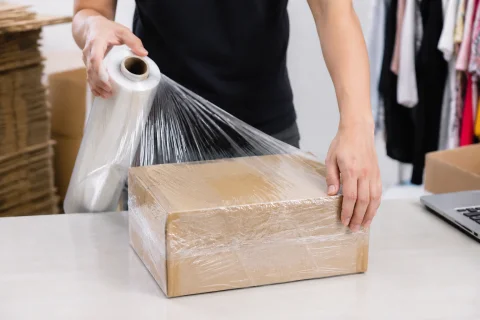
The application of advanced stretch film manufacturing plays a critical role in the transition toward eco-packaging and green logistics. By producing down-gauged, high-performance films, this manufacturing technology directly enables global supply chains to reduce plastic consumption, lower carbon footprints, and achieve sustainable pallet stabilization.
1. Ultra-Thin Down-Gauging Applications in Logistics
The primary application of this manufacturing technology is replacing traditional thick, resource-heavy wraps with high-efficiency, thin-gauge eco-films.
- Pallet Unitization: High-stretch films stabilize multi-ton cargo during transit while using up to 30% less plastic per pallet compared to conventional films.
- Material Reduction (Down-Gauging): The system enables the application of high-performance 50-micron VCI/eco-films that match the structural hold force of legacy 90-micron wraps.
- Carbon Footprint Reduction: Lowering the total weight of packaging material per pallet directly reduces fuel consumption and logistics emissions across shipping fleets.
- Waste Minimization: High stretchability ensures that less secondary packaging waste enters landfill streams at final distribution destinations.
2. Multi-Layer Co-Extrusion for Sustainable Material Applications
Modern eco-packaging requires films that can integrate recy cled materials and complex multi-layer structures without losing mechanical strength.
- Recycled Resin Integration: The manufacturing line successfully processes post-consumer recycled (PCR) and industrial scrap resins, embedding them into functional multi-layer film structures.
- 5-Layer Optimized Structuring: Allows precise placement of functional resins—sandwiching recycled materials or high-cling agents between ultra-thin, high-strength outer skins to maintain high tear resistance.
- Puncture & Edge Protection: Thin-gauge eco-films produced by this line resist sharp pallet edges, metal straps, and forklift tines, preventing transport failures without requiring extra wrapping layers.
- ±1 Micron Gauge Uniformity: Precision thickness control prevents weak thin spots, ensuring reliable containment force across the entire application surface.
3. Specialized Industry Applications (Food & Electronics)
Beyond standard logistics, the manufactured film fulfills strict, specialized environmental and safety standards required by specific market sectors.
- Food Packaging Segments: Fabricates clean-room compliant, thin-gauge protective wraps that meet strict global food safety standards, preventing food spoilage while keeping packaging materials minimal.
- Electronics and Clean-Room Shipping: Processes specialized additives to produce low-waste, antistatic stretch films for sensitive electronic components, protecting products from electrostatic discharge without using oily chemical coatings.
- Beverage and High-Speed Wrapping Line Applications: Produces rolls tailored for high-speed, fully automatic warehouse wrapping systems, ensuring zero snapping during rapid packaging workflows.
4. Energy-Saving Advantages in the Manufacturing Process
Achieving true eco-packaging requires sustainability not just in the film's usage, but during its manufacturing phase.
- Low-Current Polymer Extrusion: High-efficiency extruders draw significantly less power per kilogram of output, lowering the overall energy footprint of the production facility.
- Hydraulic-Free Servo Driving: Utilizing all-electronic servo winding systems eliminates high-maintenance hydraulic oils and saves up to 35% more electricity than older machinery.
- Zero-Waste Inline Slitting: Integrated inline slitters recycle trim scrap immediately back into the extrusion loop, enabling a circular manufacturing process with zero material waste.