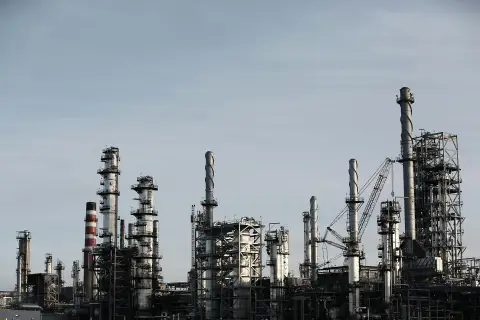
Industrial raw material industries such as fertilizer, animal feed, plastic resin, and chemical materials have unique requirements for packaging film production. Compared with consumer goods packaging, these industries usually involve heavier products, longer storage periods, and more demanding transportation conditions. The stretch film used for these applications must provide excellent load stability, moisture protection, and sufficient mechanical strength to ensure product safety throughout the supply chain.
At the same time, many industrial raw material manufacturers face changing production volumes and seasonal demand fluctuations. Fertilizer production, for example, is closely related to agricultural cycles, while animal feed, plastic resin, and chemical material industries often experience variations caused by market demand and order changes. Under these conditions, companies do not always require extremely high-speed film production systems but need a flexible and reliable solution that can adapt to different production requirements.
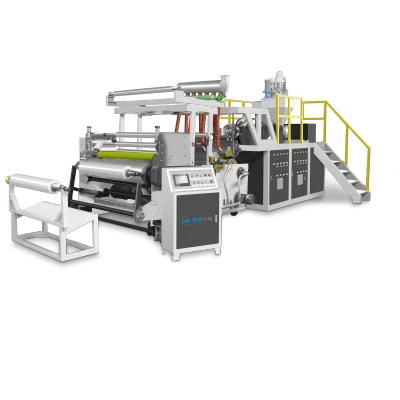
Semi-Automatic Stretch Film Manufacturing Machines provide an ideal solution for these industrial applications. By combining stable film quality with simplified operation and lower investment requirements, these machines allow manufacturers to produce their own stretch film efficiently while maintaining better control over production flexibility and operating costs.
Challenges of Stretch Film Production in Industrial Raw Material Applications
Unstable Demand and Seasonal Production Requirements
One of the major challenges faced by industrial raw material manufacturers is the fluctuation of packaging film demand. Industries such as fertilizer and agricultural materials often experience concentrated production periods before planting seasons, resulting in significant increases in packaging requirements within a limited time.
The high-speed automatic stretch film production systems are generally designed for continuous large-scale production. When production demand decreases, these machines may operate below their optimal capacity, reducing equipment utilization and increasing the difficulty of recovering the initial investment.
For manufacturers with seasonal or variable production schedules, flexibility becomes more important than maximum output speed. Semi-automatic stretch film manufacturing machines allow companies to adjust production according to actual requirements, making them suitable for businesses that need reliable film supply without maintaining continuous high-volume operation.
High Investment and Maintenance Complexity of Fully Automatic Production Lines
Modern fully automatic stretch film manufacturing machines often integrate advanced automation systems, including automatic roll changing units, automatic cutting mechanisms, servo control systems, and complex electronic components. These technologies improve production efficiency but also increase equipment investment and maintenance requirements.
For many industrial raw material companies, especially medium-sized manufacturers, the additional automation functions may not provide sufficient value compared with their actual production needs. Higher equipment complexity can also increase dependence on specialized technicians and make maintenance more challenging in factories located in remote industrial areas.
Semi-automatic stretch film manufacturing machines adopt a simpler structure by reducing unnecessary automation components. This design improves equipment reliability, simplifies daily operation, and allows local maintenance teams to perform routine service more easily.
The Role of Stretch Film in Industrial Raw Material Packaging
Providing Protection During Storage and Transportation
Stretch film plays an essential role in protecting industrial raw materials from external environmental factors. Products such as fertilizer, animal feed, resin pellets, and chemical materials are commonly stored in warehouses or transported over long distances, where exposure to moisture, dust, and handling impact can affect product quality.
High-quality stretch film creates a stable protective layer around palletized goods, helping reduce moisture penetration and contamination risks. By controlling the film production process internally, manufacturers can select suitable raw material formulations and produce films that match their specific storage conditions.
Improving Load Stability for Heavy Industrial Products
Industrial raw materials are often packaged in heavy bags or containers that require strong stabilization during transportation. Without sufficient wrapping strength, pallet loads may shift or become unstable during forklift handling, shipping, and warehouse operations.
Stretch film provides the necessary holding force to secure products together and improve overall pallet integrity. For industries handling fertilizer bags, feed sacks, and resin packaging, producing reliable stretch film is an important part of maintaining safe and efficient logistics operations.
Semi-automatic stretch film manufacturing machines enable manufacturers to produce films with consistent mechanical properties, ensuring stable wrapping performance for different industrial applications.
How Semi-Automatic Stretch Film Manufacturing Machines Support Industrial Production
Flexible Production for Changing Market Requirements
The greatest advantage of semi-automatic stretch film manufacturing machines is their ability to adapt to changing production conditions. Unlike fully automatic systems designed primarily for continuous mass production, semi-automatic machines provide a more flexible operating model.
Manual roll changing and simplified operation allow manufacturers to quickly adjust production schedules based on customer orders and seasonal demand. This is particularly valuable for fertilizer manufacturers, feed producers, and industrial material suppliers that experience significant fluctuations throughout the year.
This flexibility helps companies maintain their own stretch film supply without investing in oversized production capacity that may remain unused during low-demand periods.
Lower Investment and Better Cost Efficiency
For many industrial raw material manufacturers, producing stretch film internally can reduce dependence on external suppliers and improve supply chain stability. However, the investment cost of a fully automatic production line may be too high for companies with moderate production requirements.
Semi-automatic stretch film manufacturing machines provide a more economical alternative. Their simplified structure reduces equipment cost, installation requirements, and maintenance expenses while still delivering stable film production performance.
This makes them especially suitable for companies that require reliable stretch film production but prioritize cost control and operational efficiency.
Reliable Operation in Industrial Environments
Industrial production environments can be challenging due to dust, temperature variations, and continuous factory operation. Equipment reliability is therefore an important consideration when selecting a stretch film production system.
Semi-automatic stretch film manufacturing machines feature a simpler mechanical structure with fewer automated components, reducing potential failure points. This design improves long-term stability and makes troubleshooting and maintenance easier.
For fertilizer plants, resin factories, and chemical material manufacturers, reliable equipment operation helps minimize downtime and maintain continuous production efficiency.
Application Areas of Semi-Automatic Stretch Film Manufacturing Machine
Fertilizer and Agricultural Material Industry
The fertilizer industry represents one of the typical applications for semi-automatic stretch film manufacturing machines. Fertilizer products are usually packaged in heavy bags and require strong protection against moisture during storage and transportation.
Because fertilizer production is often seasonal, manufacturers need a flexible film production solution that can respond quickly to changes in demand. Semi-automatic machines allow fertilizer companies to produce suitable industrial stretch film during peak seasons while maintaining lower operating costs during slower periods.
Animal Feed Industry
Animal feed manufacturers require stretch film with reliable holding force and durability because feed bags are often heavy and transported in large pallet quantities.
By using semi-automatic stretch film manufacturing machines, feed producers can manufacture films with suitable stretching performance and mechanical strength for different packaging requirements. This improves pallet stability and reduces the risk of damage during transportation.
Plastic Resin and Chemical Material Industry
Plastic resin and chemical material manufacturers often handle products that require long-term storage protection and stable transportation performance. Resin bags, chemical containers, and industrial raw materials may need stretch film with higher strength, better adhesion, and improved environmental resistance.
Semi-automatic stretch film manufacturing machines provide the flexibility needed to produce customized industrial films, including high-tack films and UV-resistant films, helping manufacturers meet specific packaging requirements.
For industrial raw material manufacturers, investing in a reliable stretch film manufacturing machine means gaining better control over film quality, production flexibility, and packaging costs. Our semi-automatic stretch film manufacturing machine provides a practical solution for fertilizer, feed, resin, and chemical material industries by combining stable output, easy operation, and cost-effective performance. With the ability to produce customized stretch film for different applications, it helps companies reduce dependence on external suppliers and build a more efficient in-house film production system.