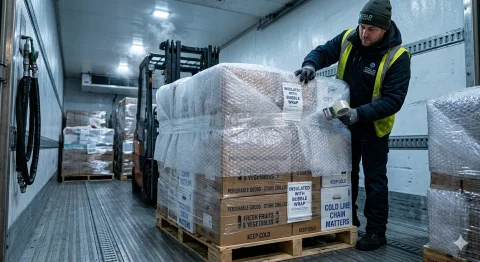
Cold chain logistics requires packaging materials that can maintain stable protection performance throughout transportation and storage. From vaccines and pharmaceutical products to seafood, fresh food, and diagnostic reagents, temperature-sensitive goods rely on advanced insulation solutions to reduce heat transfer, prevent moisture damage, and minimize physical impact.
High-performance bubble film has become an important material for cold chain packaging due to its lightweight structure, cushioning ability, and thermal insulation properties. The production of these functional films depends on advanced bubble film manufacturing machines that can create multi-layer structures, integrate barrier materials, and ensure consistent film quality for demanding logistics applications.
Challenges of Traditional Cold Chain Packaging Materials
Limited Thermal Insulation Performance During Long-Distance Transportation
Maintaining a stable temperature environment is one of the biggest challenges in cold chain logistics. Products often experience long transportation periods involving air freight, sea shipping, and ground delivery, where external temperature fluctuations can affect packaging performance.
Traditional packaging materials, including basic plastic films and single-layer protective materials, usually provide limited thermal resistance. Their insulation capability depends mainly on material thickness, which can increase packaging weight and transportation costs without delivering sufficient temperature protection.
Standard bubble films may also experience reduced performance when air pockets collapse under pressure. Once the trapped air layer is damaged, the ability to slow down heat transfer decreases, making it difficult to maintain consistent protection during extended transportation.
Insufficient Moisture Resistance and Condensation Control
Condensation is another common issue in cold chain packaging. Temperature differences between the inside and outside environment can cause moisture accumulation, which may affect product labels, packaging structures, and sensitive goods.
For pharmaceutical products, medical supplies, and laboratory materials, excessive moisture exposure can create additional risks. Traditional packaging films often lack effective barrier properties, allowing water vapor to penetrate and reducing the overall reliability of the packaging system.
A high-performance cold chain packaging solution requires materials with better moisture control and lower water vapor transmission rates to maintain a stable internal environment.
Weak Mechanical Protection for Sensitive Products
Cold chain products are often high-value items that require protection against vibration, impact, and compression during transportation. Glass vaccine containers, diagnostic equipment, seafood packaging, and other fragile products may suffer damage if the packaging material cannot provide sufficient cushioning.
Conventional insulation materials may focus only on thermal performance while offering limited mechanical protection. This creates a challenge for manufacturers that need packaging materials capable of combining insulation, cushioning, and durability in one solution.
The Role of Bubble Film in Cold Chain Packaging Applications
Multi-Layer Bubble Structures Improve Thermal Insulation
Multi-layer bubble film provides an effective solution for improving temperature protection in cold chain transportation. The air trapped inside each bubble creates an insulating layer that reduces direct heat transfer between the external environment and the packaged product.
Compared with conventional single-layer films, multi-layer bubble films produced by advanced bubble film manufacturing machines can achieve improved structural stability through optimized layer combinations. Different resin materials can be assigned specific functions, allowing the film to achieve better flexibility, strength, and insulation performance.
For applications such as vaccine transportation, pharmaceutical delivery, and frozen food logistics, this stable air-cushion structure helps extend the protection period and supports safer long-distance shipment.
Barrier Layers Enhance Moisture and Heat Resistance
Modern cold chain packaging often requires more than basic insulation. Functional barrier layers can be integrated into bubble film structures to improve resistance against moisture and external thermal radiation.
Through multi-layer extrusion and lamination technology, manufacturers can produce bubble films with specialized layers designed for different requirements. Metallized layers, for example, can help reflect radiant heat, while barrier materials improve moisture resistance.
This combination enables bubble film to create a more controlled packaging environment, reducing the impact of external temperature changes and humidity fluctuations.
Lightweight Cushioning Protection Reduces Product Damage
In addition to insulation performance, bubble film provides reliable cushioning protection during transportation. The air-filled structure absorbs external forces and reduces the risk of damage caused by vibration, compression, and impact.
For cold chain industries, this lightweight protection is especially valuable because it helps reduce packaging weight while maintaining sufficient product safety. Compared with heavier traditional insulation materials, bubble film offers a practical balance between protection performance and transportation efficiency.
How Bubble Film Manufacturing Machines Support Cold Chain Film Production
7-Layer Co-Extrusion Technology for Functional Film Structures
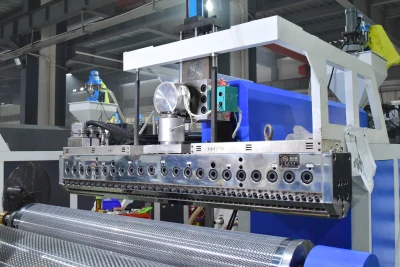
The performance of cold chain bubble film largely depends on manufacturing technology. Advanced bubble film manufacturing machines use multi-layer co-extrusion systems to combine different polymer materials into a single composite structure.
A 7-layer bubble film production line allows manufacturers to design films with dedicated functional layers. Inner layers can provide flexibility and sealing performance, middle layers can enhance insulation properties, and outer layers can improve strength and durability.
This flexible layer configuration enables manufacturers to develop customized bubble films for different cold chain applications, including pharmaceutical packaging, food transportation, and specialized temperature-controlled logistics.
Precision Extrusion Control Ensures Stable Film Quality
Consistent film quality is essential for commercial cold chain packaging production. Uneven thickness, unstable bubble formation, or inconsistent layer distribution can affect insulation performance and increase material waste.
Advanced bubble film manufacturing machines are equipped with precise extrusion control systems to maintain stable material flow, accurate layer distribution, and uniform bubble formation. Temperature control technology helps optimize polymer processing conditions, ensuring reliable production performance during continuous operation.
With improved process stability, manufacturers can produce bubble films with consistent thickness, strong bonding between layers, and dependable protective performance.
Integrated Lamination and Winding Systems Improve Production Efficiency
Cold chain packaging often requires customized film structures, including laminated barrier layers and special surface treatments. Modern bubble film manufacturing machines can integrate lamination systems to combine additional functional materials during production.
This in-line processing capability reduces additional converting steps and improves production efficiency. At the same time, advanced winding and slitting systems ensure finished rolls maintain consistent dimensions and quality for downstream packaging operations.
Sustainable and Efficient Production for Modern Packaging Markets
As industries move toward more sustainable packaging solutions, manufacturers are also focusing on reducing material consumption and improving production efficiency. Modern bubble film manufacturing machines support optimized material usage through accurate extrusion control and flexible layer design.
Multi-layer structures allow manufacturers to place high-performance materials only where they are needed, while recycled materials can be incorporated into suitable layers when application requirements allow. This approach helps reduce production costs while maintaining the required insulation and protection performance.
Energy-efficient components and intelligent control systems further support stable operation and improved manufacturing efficiency, helping producers meet the changing demands of global packaging markets.
Advanced Bubble Film Manufacturing Machines for Cold Chain Packaging Production
The increasing demand for reliable cold chain logistics requires packaging manufacturers to produce bubble films with higher insulation performance, stronger barrier properties, and better mechanical protection. A well-designed production system is essential for achieving these requirements.
Our bubble film manufacturing machines are developed to help manufacturers produce high-quality multi-layer bubble films for pharmaceutical, food, seafood, and temperature-sensitive packaging applications. With advanced co-extrusion technology, precise extrusion control, and flexible production configurations, our machines provide a reliable solution for producing customized protective materials.
By choosing our bubble film manufacturing machines, manufacturers can improve production efficiency, expand cold chain packaging capabilities, and deliver high-performance bubble film solutions that meet the evolving needs of global logistics industries.