Precautions for Using a 3–5 Layer Low-Speed Bubble Film Machine
2026-08-27
Operating a 3-5 layer low-speed bubble film machine well is less about pushing output and more about protecting consistency. Every roll of finished film reflects how carefully the equipment was warmed up, fed, maintained, and monitored during the shift before it. For plants producing air bubble film for e-commerce, electronics, and industrial packaging, that consistency is the difference between a customer who reorders and one who switches suppliers over a batch of collapsed bubbles or torn film. Understanding the operating precautions that matter most for a bubble film extrusion machine helps operators protect both product quality and long-term equipment stability.
Problems with Traditional Operating Practices
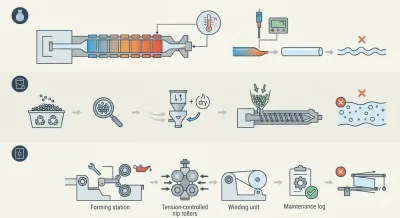
Many production issues on multilayer film lines trace back to a handful of recurring weaknesses rather than equipment failure. Uneven thermal control across extrusion zones is one of the most common. When co-extrusion layers are not brought to their target temperatures in a controlled sequence, melt viscosity between layers becomes mismatched, producing thickness variation, poor bubble definition, or bubbles that collapse shortly after formation. A second weakness sits upstream of the die entirely: raw material handling. Resin or recycled pellets that carry residual moisture or contamination introduce pinholes, weak spots, and irregular bubble geometry that no amount of downstream adjustment can fully correct.
Maintenance gaps compound both problems. Forming stations and cooling calibration rollers that go unchecked for extended periods gradually lose the precision that even bubble sizing depends on, while nip rollers and winding units that drift out of tension or alignment produce wrinkled, loosely wound rolls that customers reject on arrival. Add inconsistent safety practices and abrupt line speed changes into the mix, and the result is a production environment where output quality depends heavily on which operator happens to be running the shift, rather than on a repeatable process built into the machine itself.
Why Bubble Film Quality Matters Across the Packaging Industry
Air bubble film has become one of the most widely used cushioning materials in modern logistics because it offers a favorable combination of lightweight construction, flexibility, and impact absorption. For fragile electronics, glassware, and precision instruments moving through long supply chains, the integrity of each bubble directly determines whether a product arrives intact. Inconsistent bubble film does not just create returns and claims; it erodes trust in the packaging supplier and, by extension, in the equipment used to produce it. As e-commerce volumes continue to demand more customized, smaller-batch packaging runs, the ability to produce dependable film on a controllable, low-speed line has become a genuine competitive advantage rather than a secondary concern.
How Our 3-5 Layer Low-Speed Bubble Film Machine Addresses These Challenges
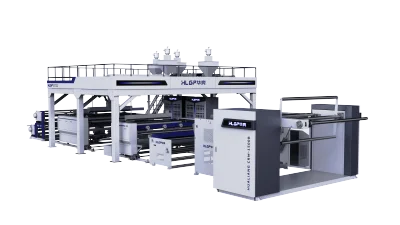
A well-engineered bubble film extrusion machine turns each of these traditional weak points into a controlled variable. Independent temperature zone regulation across the 3 to 5 co-extrusion layers keeps melt flow synchronized from feed throat to die exit, which is precisely what allows thickness tolerances to stay tight across an entire production run, an important capability for customers packaging precision electronics or optical components where dimensional consistency cannot be compromised.
On the forming side, a stabilized bubble forming and cooling calibration system keeps bubble diameter and wall thickness uniform from the first meter of film to the last, giving fragile-goods packagers the structural reliability they need for glass, ceramics, and other impact-sensitive products. Precision-controlled nip roller and winding tension, paired with alignment monitoring, produces flat, evenly wound rolls that unwind cleanly on automated packaging lines, a detail that matters increasingly to customers running high-throughput fulfillment operations where machine-fed film cannot afford to snag or wrinkle.
Compared with high-speed bubble film extrusion machines, a relatively lower operating speed can provide greater process stability and more time for operators to monitor production conditions. This allows thermal fluctuations, material inconsistencies, or bubble instability to be identified and adjusted before they develop into significant quality issues. Such a configuration can be a practical choice for mid-volume producers that frequently switch between film widths, layer structures, or resin formulations. By prioritizing stable production and flexible changeovers rather than maximum throughput, manufacturers can maintain consistent film quality across a wider range of customized packaging orders.
Core Operating Precautions for Daily Production
Temperature discipline should come first. Allow the machine to reach its recommended zone temperatures, typically in the range of 160°C to 210°C depending on resin type and layer configuration, before starting production, and verify each zone with calibrated sensors rather than relying on display readings alone. Skipping this warm-up period is one of the fastest ways to introduce thickness variation into an otherwise well-tuned line.
Material handling deserves equal attention. Resin and recycled inputs should be visually inspected and, where necessary, run through a drying unit to keep moisture content low, generally below 0.02 percent for polyethylene-based formulations, since excess moisture is a direct cause of pinholes and inconsistent bubble walls. Matching resin grade to the machine's designed specifications also protects the screw and barrel from unnecessary wear over time.
Routine mechanical checks keep the line predictable. Forming stations and cooling calibration rollers should be inspected on a set schedule, nip rollers and winding units checked for tension stability and alignment, and moving parts lubricated according to manufacturer guidance, avoiding over-lubrication, which tends to attract dust and interfere with mechanical performance. A simple maintenance log that tracks wear patterns makes it far easier to plan part replacement before a failure interrupts production.
Safety procedures should never be treated as optional steps. Lockout-tagout should be engaged before any cleaning or adjustment work, heat-resistant gloves and safety glasses should be standard near the die and other heated components, and the production area should have adequate ventilation to manage heat and minor processing odors. Operators should also receive clear training on emergency shutdown procedures specific to the machine.
Finally, workflow stability protects the mechanical system as a whole. Maintaining a steady line speed and avoiding abrupt changes reduces stress on drive components, while regularly checking cushioning performance and bubble integrity keeps quality issues visible before they reach a customer's dock.
Building Long-Term Value Into Every Roll
Following these precautions consistently does more than prevent defects on any single shift; it extends the working life of the equipment, reduces unplanned downtime, and lowers material waste over months and years of operation. For manufacturers evaluating a new bubble film extrusion machine, these are exactly the capabilities worth prioritizing: precise multi-zone temperature control, a stable bubble forming and cooling system, reliable tension and alignment management, and a low-speed configuration built for flexibility rather than volume alone. Our 3-5 layer low-speed bubble film machine is engineered around these principles from the ground up, giving packaging manufacturers a dependable platform for producing consistent, high-protection bubble film across a wide range of order sizes and specifications. Reach out to our team to discuss how this machine can fit into your production line and support your long-term output goals.