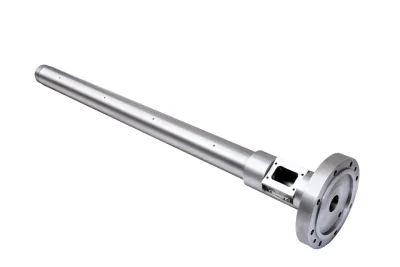
Advantages of Thick-Walled Barrel and Screw Design for Temperature Control
2026-07-28
Temperature control is one of the most important factors affecting the quality and stability of plastic film production. During extrusion, polymer materials must be heated, melted, mixed, and transported under controlled conditions to achieve consistent melt quality. Even small temperature fluctuations inside the extrusion system can influence polymer viscosity, material flow behavior, and final film performance.
For manufacturers operating a stretch film extrusion machine or bubble film extrusion machine, maintaining a stable melting environment is essential for producing films with uniform thickness, reliable mechanical properties, and consistent appearance. The design of the extrusion barrel and screw system plays an important role in achieving this stability.
Compared with conventional thin-walled barrel structures, a thick-walled barrel design provides greater thermal capacity and improved heat retention. Combined with an optimized screw structure, it helps create a more stable processing environment, allowing manufacturers to achieve more consistent extrusion performance during continuous production.
Limitations of Traditional Thin-Walled Barrel Designs
The barrel is one of the core components of an extrusion system, directly affecting heat transfer, polymer melting, and pressure stability. In some traditional extrusion configurations, thin-walled barrels may have limited thermal buffering capability due to their lower material mass.
During production, extrusion processes are influenced by various external factors, including ambient temperature changes, cooling conditions, and fluctuations in production speed. A barrel with insufficient thermal stability may experience faster heat loss, requiring the heating system to respond more frequently to maintain the required processing temperature.
Frequent temperature adjustments can affect the consistency of polymer melting. When melt temperature changes during extrusion, resin viscosity may also fluctuate, influencing material flow through the die head. This can result in variations in film thickness, surface quality, and mechanical performance.
For high-precision film applications, unstable temperature conditions can increase the difficulty of maintaining consistent product quality. This is particularly important for stretch film production, where uniform thickness, stable stretching performance, and reliable winding quality are required. It is also important for bubble film production, where consistent melt flow directly affects bubble formation, film structure, and cushioning performance.
How Thick-Walled Barrel Design Improves Temperature Stability
A thick-walled barrel increases the thermal mass of the extrusion system, allowing it to store and maintain heat more effectively during operation. This additional thermal capacity helps reduce the influence of external temperature changes and provides a more stable environment for polymer processing.
During continuous extrusion, the barrel works together with heating zones and cooling systems to maintain the required temperature profile. A stable barrel structure allows heat to be distributed more evenly along the processing section, helping reduce localized temperature fluctuations.
This improved thermal stability benefits the entire extrusion process. When polymer materials maintain a more consistent melting condition, the screw can deliver a more uniform melt flow to the die head. As a result, manufacturers can achieve better control over film thickness, layer distribution, and overall product consistency.
For both stretch film extrusion machines and bubble film extrusion machines, stable melt conditions are valuable because film quality depends on precise control of extrusion pressure, material flow, and temperature distribution. In stretch film production, consistent melt flow supports uniform thickness and reliable stretching performance. In bubble film production, it helps maintain stable bubble formation and consistent film structure during long production runs.
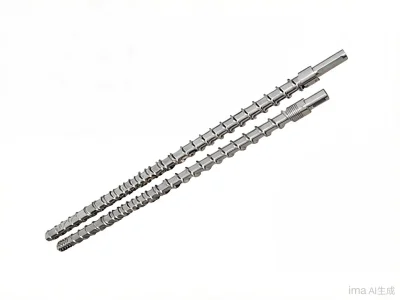
The Role of Screw Design in Efficient Polymer Processing
While barrel design provides thermal stability, the screw plays a critical role in melting, mixing, and transporting polymer materials. An optimized screw structure ensures that resin is properly plasticized and evenly distributed before reaching the die.
The screw geometry, including flight design, compression ratio, and mixing section configuration, influences how effectively mechanical energy is converted into heat and how uniformly polymer materials are processed.
A well-designed screw system works together with a thick-walled barrel to maintain balanced temperature distribution. Proper material mixing reduces variations in melt quality and supports stable extrusion pressure during extended production periods.
For manufacturers producing stretch films and bubble films with different resin combinations, including LLDPE, mLLDPE, and recycled materials, screw optimization becomes increasingly important. Different materials have different melting characteristics, and an appropriate screw design helps ensure efficient processing while maintaining final film performance.
In a stretch film extrusion machine, optimized screw performance helps achieve stable melt delivery for thin and uniform film production. In a bubble film extrusion machine, effective plasticization and mixing support consistent bubble formation and reliable cushioning properties.
Benefits of Improved Thermal Control in Film Production
Stable temperature management provides several practical advantages for film manufacturers. The most direct benefit is improved consistency in the final product.
When extrusion temperature remains stable, polymer melt maintains more predictable flow characteristics. This helps machines produce films with more uniform thickness and stable mechanical properties.
Improved thermal control also supports better production efficiency. Stable extrusion conditions reduce the need for frequent adjustments by operators and help maintain consistent output during extended production periods.
In addition, maintaining a balanced temperature profile can contribute to longer component service life. When heating elements and electrical components do not need to compensate excessively for thermal fluctuations, operational stress can be reduced.
For modern packaging applications, these improvements are important because different film products require reliable performance. Stretch films require good elongation, puncture resistance, and load retention, while bubble films require stable thickness, uniform bubble structure, and consistent protective performance.
Supporting Reliable Performance in High-Efficiency Film Extrusion
As film production continues to move toward higher output and more specialized products, extrusion equipment requires stronger control over processing conditions. The combination of thick-walled barrel construction and optimized screw design provides an effective approach for improving thermal stability and extrusion reliability.
This design approach is particularly suitable for industrial stretch film extrusion machines and bubble film extrusion machines that operate continuously under demanding production conditions. By improving heat retention, supporting uniform melting, and maintaining stable material flow, the extrusion system can achieve more predictable production performance.
Whether producing stretch film for logistics packaging or bubble film for protective packaging applications, stable extrusion conditions help manufacturers improve product consistency and maintain reliable operation.
Optimized Extrusion Design for Stretch Film and Bubble Film Machines
The extrusion system is the foundation of high-performance film production equipment. Our stretch film extrusion machines and bubble film extrusion machines adopt carefully engineered barrel and screw designs to provide stable temperature control and reliable polymer processing performance.
By integrating thick-walled barrel structures, optimized screw configurations, and precise temperature management systems, our machines are designed to support consistent film production across different packaging applications. The balanced extrusion design helps manufacturers achieve stable output, improved film uniformity, and dependable long-term operation.
Whether producing stretch film for industrial packaging, logistics applications, or bubble film for protective packaging solutions, our film extrusion machines provide reliable solutions for manufacturers seeking efficient production, consistent quality, and durable equipment performance.
With practical engineering design and attention to production requirements, our stretch film manufacturing machines and bubble film making machines help customers build stable and competitive film production operations.