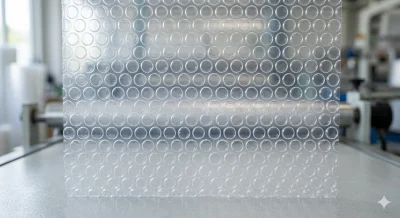
Thickness tolerance control is a critical factor in achieving stable, high-quality output in air bubble film extrusion. In multi-layer production lines such as 2-layer, 3-layer, or 5-layer systems, even small variations in film thickness can affect cushioning performance, material efficiency, and overall product uniformity. Stable control relies on three core engineering principles: thermal uniformity, melt viscosity stability, and precision die regulation.
Thermal Uniformity in the Extrusion Barrel
Thermal uniformity is the foundation of stable extrusion. Multi-zone heating systems with real-time feedback control are used to maintain consistent barrel temperatures along the entire processing path. This reduces localized overheating or underheating, which can cause unstable melt flow.
In high-speed extrusion lines, stable temperature control is especially important due to increased throughput. Optimized screw geometry further supports uniform plasticization by ensuring consistent shear and melting behavior across different material blends. As a result, the polymer melt enters the die with stable viscosity and reduced flow fluctuation.
Melt Viscosity Stability and Flow Control
Stable melt viscosity is essential for maintaining consistent material distribution. When temperature and shear conditions are controlled effectively, the melt behaves more predictably during transport and shaping.
This stability reduces flow surging and minimizes gauge banding across the film width. It also improves the consistency of bubble formation, particularly in continuous high-speed production environments.
Precision Die and Closed-Loop Thickness Control
At the die stage, precise mechanical and feedback control is required to ensure thickness accuracy. Modern systems integrate automatic die lip adjustment mechanisms combined with real-time thickness measurement using infrared or laser sensors.
During bubble expansion, continuous monitoring allows micro-adjustments of the die gap to correct any deviation in film thickness. This helps maintain tight thickness tolerances, typically within ±2% across the web.
Air ring cooling systems further support uniform solidification of the bubble. Balanced airflow prevents localized thinning and ensures consistent film structure. In multi-layer co-extrusion systems, each layer is controlled independently to maintain target thickness while preserving strong interlayer adhesion.
System-Level Process Stability
Overall process stability depends not only on individual components but also on system integration. Melt pressure stabilization systems help reduce fluctuations caused by pump variation. Gravimetric feeding systems ensure consistent raw material ratios, which directly supports viscosity stability.
These combined controls reduce process variation, improve continuous production stability, and enhance final film uniformity.