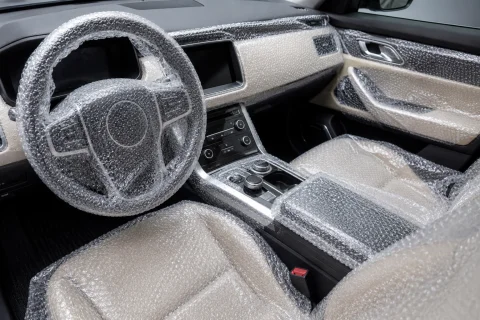
The automotive industry requires a high level of protection for interior components throughout storage, handling, and transportation. Premium dashboards, leather seats, center consoles, and decorative trims can easily suffer from scratches, pressure marks, dust contamination, and surface damage before reaching the final assembly line. To meet these strict quality requirements, manufacturers increasingly rely on customized protective packaging materials produced by advanced bubble film manufacturing machines.
By producing multi-layer bubble films with controlled cushioning performance, anti-static properties, and flexible structures, modern bubble film production solutions help automotive suppliers protect sensitive components while improving packaging efficiency and reducing material waste.
Challenges in Automotive Interior Component Packaging
Automotive interior parts are becoming more sophisticated, with high-gloss surfaces, soft-touch coatings, electronic modules, and premium decorative materials widely used in modern vehicles. Although these components improve vehicle quality and user experience, they also create higher requirements for transportation protection.
Risk of Surface Scratches and Appearance Defects
High-end interior components such as piano-black panels, leather-covered parts, and decorative trims are extremely sensitive to surface friction. Even small scratches or abrasion marks can affect the final appearance and result in additional inspection, repair, or replacement costs.
Traditional packaging methods may provide basic impact protection but cannot always prevent surface-to-surface contact during transportation. When multiple components are stacked or moved repeatedly, friction between packaging materials and parts may create unwanted marks.
Pressure Marks on Soft Interior Materials
Many automotive interior components use flexible materials, including leather, synthetic leather, and soft-touch plastics. Excessive pressure from packaging materials can leave temporary or permanent impressions on these surfaces.
A protective material with uneven cushioning performance may concentrate pressure on specific areas instead of distributing impact forces evenly. For premium automotive suppliers, maintaining the original surface condition of every component is essential for meeting strict quality standards.
Dust and Static Electricity Contamination
Modern vehicles contain more electronic and intelligent interior systems, including touch panels, sensors, control modules, and integrated displays. During transportation, static electricity can attract dust particles, which may affect cleanliness requirements before assembly.
For automotive suppliers, protective packaging is no longer limited to mechanical protection. Functional packaging materials with anti-static characteristics are increasingly required to maintain component cleanliness throughout the supply chain.
Limitations of Traditional Protective Packaging Materials
Although traditional packaging materials such as paper, foam sheets, and standard plastic films are widely used, they may not fully satisfy the protection requirements of modern automotive production.
Conventional materials often provide only basic cushioning without additional functions such as anti-static performance, customized layer structures, or enhanced puncture resistance. For global automotive supply chains involving long-distance transportation, these limitations can increase the risk of product damage.
Standard bubble films may also have inconsistent bubble formation, resulting in uneven cushioning performance. If bubble height, air volume, or film thickness varies significantly, some areas of the packaged component may receive insufficient protection.
To overcome these challenges, automotive suppliers need protective films produced with precise manufacturing technology. This is where advanced bubble film manufacturing machines provide significant advantages by enabling customized film structures designed for specific applications.
The Role of Bubble Film in Automotive Interior Protection
Bubble film has become an important protective material for automotive interior components because it combines lightweight cushioning, flexibility, and customizable performance. With the right production technology, manufacturers can create films optimized for different vehicle parts and transportation conditions.
Customized Cushioning for Sensitive Components
The primary function of bubble film is to provide a soft cushioning layer between the component surface and external impact forces. Uniform bubble structures help distribute pressure more evenly, reducing the possibility of scratches and deformation.
For sensitive automotive applications, bubble film can be customized according to component requirements:
- Dashboards and center consoles require stable cushioning to protect large surface areas.
- Leather seats require soft contact layers to prevent marks and friction damage.
- Decorative trims require flexible protection to avoid scratches on visible surfaces.
- Electronic interior components require clean and anti-static packaging solutions.
Multi-Layer Structure for Enhanced Protection
Different automotive applications require different levels of protection. Multi-layer bubble film technology allows manufacturers to produce materials with optimized strength, flexibility, and functional performance.
Two-layer bubble film is suitable for lightweight interior components that mainly require basic cushioning and surface protection. It provides an economical packaging solution for standard automotive parts.
Three-layer to five-layer bubble film offers improved strength and puncture resistance, making it suitable for larger or more complex components that require additional protection during transportation.
Seven-layer bubble film provides advanced performance through multiple functional layers. It can integrate enhanced mechanical strength, anti-static properties, and customized material combinations for high-value automotive supply chains.
Anti-Static and Dust Protection Performance
For automotive interior components containing electronic elements, anti-static bubble film provides additional protection beyond traditional cushioning.
During production, specialized bubble film manufacturing machines can process functional materials and additives to achieve controlled surface resistivity. Anti-static bubble film helps reduce electrostatic charge accumulation, minimizing dust attraction during storage and transportation.
This feature is particularly valuable for clean automotive manufacturing environments where component appearance and assembly quality are strictly controlled.
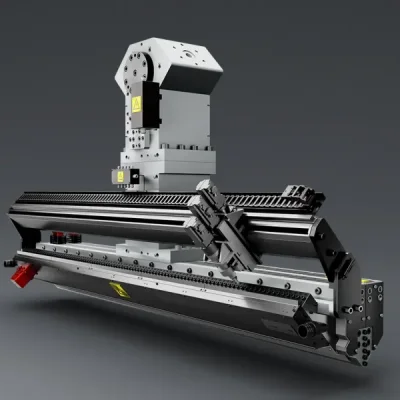
How Bubble Film Manufacturing Machines Support Automotive Packaging Production
The performance of protective bubble film depends greatly on production accuracy and process stability. Advanced bubble film manufacturing machines allow manufacturers to produce consistent, high-quality packaging materials that meet automotive industry requirements.
Precise Bubble Formation for Stable Cushioning
Bubble formation accuracy directly affects the protective performance of the final film. Modern production lines use precise forming systems to maintain consistent bubble size, height, and air distribution across the entire film width.
Stable air-fill control helps prevent issues such as flat bubbles or uneven cushioning areas. This ensures that every roll of bubble film provides reliable protection during transportation.
Flexible Multi-Layer Film Production
Automotive suppliers often require different film structures for various components. Advanced bubble film manufacturing machines support multiple layer configurations, allowing manufacturers to produce customized solutions from standard protective films to high-performance multi-layer materials.
Production flexibility enables packaging manufacturers to adjust:
- Film thickness according to protection requirements.
- Bubble size based on component weight.
- Layer structure according to durability needs.
- Material combinations according to application conditions.
This flexibility helps automotive suppliers optimize packaging performance while controlling material consumption.
Stable Film Quality Through Intelligent Control Systems
Consistent film quality is essential for automotive applications. Advanced production equipment integrates technologies such as servo-driven tension control, precision temperature regulation, and automatic thickness adjustment.
These systems help maintain uniform film thickness, reduce wrinkles, and improve dimensional stability. As a result, protective bubble film can better adapt to curved and complex automotive components.
Sustainable Production for Automotive Supply Chains
Sustainability has become an important consideration throughout the automotive industry. Modern bubble film production technology supports the use of recycled LDPE materials and optimized material distribution.
By improving production efficiency and reducing unnecessary material usage, manufacturers can produce protective packaging solutions that support environmental targets while maintaining required protection performance.
Advanced Bubble Film Manufacturing Machines for Automotive Protection
Automotive packaging requires protective materials that combine cushioning performance, surface protection, functional properties, and consistent production quality. With advanced multi-layer technology, precise control systems, and flexible material processing capabilities, bubble film manufacturing machines enable manufacturers to produce customized protective solutions for dashboards, leather seats, decorative trims, and other sensitive interior components.
Our bubble film manufacturing machines are designed to help automotive packaging suppliers achieve stable production, customized film structures, and reliable protection performance. From two-layer systems to multi-layer high-speed production lines, we provide efficient solutions for producing high-quality bubble films that meet the demanding requirements of modern automotive supply chains.