How to Choose the Best Bubble Film Extrusion Machine for Your Factory: A Complete Guide
2026-05-09
Selecting the right bubble film extrusion machine is critical for optimizing material costs and output consistency. This guide evaluates key configurations—ranging from 2-layer high-speed to 7-layer high-speed bubble film extrusion machines—to help you align technical capabilities with production requirements.
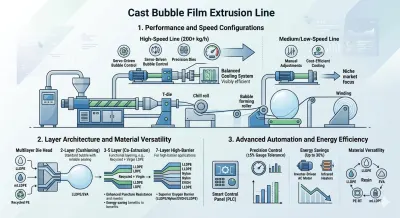
1. Performance and Speed Configurations
The balance between output volume and film quality is determined by the machine's speed class and cooling efficiency:
- High-Speed Lines (200+ kg/h): Designed for high-volume fulfillment, these machines utilize servo-driven bubble control and precision dies to maintain uniform bubble geometry during rapid cycles.
- Medium/Low-Speed Lines: Ideal for niche markets or fluctuating volumes, these models offer cost-efficient production with simplified cooling sections and manual adjustments without sacrificing film integrity.
2. Layer Architecture and Material Versatility
Layer configuration dictates the film's mechanical properties and barrier functions:
- 2-Layer Machines: The standard for cost-effective cushioning. These lines focus on reliable sealing and basic protective packaging.
- 3-5 Layer Co-Extrusion: Advanced multilayer co-extrusion technology allows for functional layering (e.g., combining recycled LDPE with virgin LLDPE). This improves puncture resistance and reduces energy consumption by eliminating downstream lamination.
- 7-Layer High-Speed Machines: The flagship solution for high-barrier applications. These machines can achieve superior oxygen transmission rates for export-grade protection.
3. Advanced Automation and Energy Efficiency
Modern bubble film extrusion lines integrate smart technologies to minimize waste:
- Precision Control: PLC-automated systems and real-time thickness gauges maintain gauge tolerances within ±5%, minimizing material giveaway.
- Energy Savings: Inverter-driven AC motors and infrared heaters can reduce power consumption by up to 30% compared to legacy models.
- Material Compatibility: High-spec models are optimized for various polyolefins, including LLDPE, mLLDPE, and EVA, ensuring flexibility in resin sourcing.
4. Technical Specifications Summary
To achieve optimal ROI, ensure the machine's layflat width, bubble diameter (up to 30mm), and screw L/D ratio meet your specific transport standards, such as ISTA 1A or ASTM D4169. By matching layer count and speed class to operational targets, factories can significantly enhance packaging performance and reduce scrap rates.