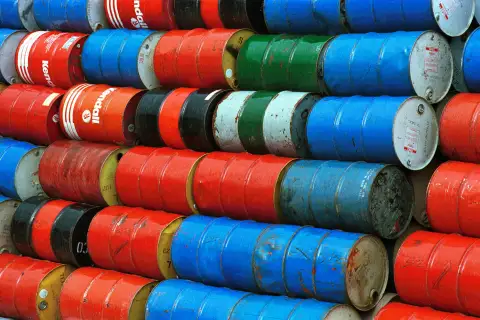
Chemical drum packaging requires reliable load protection, stable wrapping performance, and consistent film quality throughout transportation and storage. Unlike lightweight packaging applications, chemical drums usually involve heavy cylindrical loads with concentrated pressure points. During handling, stacking, and long-distance logistics, these drums are exposed to vibration, impact, and shifting forces that can challenge the integrity of conventional packaging materials.
Traditional monolayer stretch films often depend on increased thickness to achieve higher strength. Although thicker films can provide improved protection, they also increase material consumption and operating costs. In addition, a single-layer structure cannot easily balance different performance requirements, such as puncture resistance, stretchability, cling force, and load retention.
For manufacturers supplying industrial packaging films, producing a film with higher mechanical performance while reducing material usage has become an important market requirement. The 3-Layer Stretch Film Manufacturing Machine provides an advanced production solution by using multi-layer co-extrusion technology to create functional film structures designed for demanding applications such as chemical drum packaging.
Challenges of Conventional Stretch Films in Heavy Drum Packaging
Chemical drums create unique challenges for stretch film applications. Due to their cylindrical shape and high weight, the contact area between drums and packaging materials is relatively limited. This causes concentrated stress during transportation, especially when loads experience sudden movement or external impact.
A conventional stretch film with insufficient puncture resistance may be damaged by sharp edges, drum surfaces, or pallet structures. Once the film is broken, the overall containment force decreases, affecting the stability of the entire package. For chemical products, unstable packaging can increase the risk of product damage, transportation problems, and additional handling costs.
Another limitation of traditional single-layer films is the difficulty of achieving multiple functions through one material layer. High strength often requires thicker film, while high cling performance and flexibility require different material characteristics. Increasing thickness can improve certain mechanical properties, but it reduces packaging efficiency and increases resin consumption.
Modern industrial packaging is moving toward lightweight and sustainable solutions. Instead of simply producing thicker films, manufacturers are focusing on advanced film structures that provide stronger performance with optimized material usage. This development creates greater demand for stretch film manufacturing equipment capable of producing precise multi-layer films.
The Role of Stretch Film in Chemical Drum Packaging
Stretch film plays an essential role in maintaining load stability during the storage and transportation of chemical drums. By applying controlled stretching force around the drum group, the film creates a continuous wrapping structure that helps secure individual containers and improve overall package integrity.
A high-performance stretch film must provide sufficient containment force to prevent drum movement while maintaining flexibility during wrapping. The film needs to stretch evenly without breaking and recover effectively after application to maintain long-term holding performance.
In chemical drum packaging, the film structure directly affects packaging reliability. A well-designed multi-layer film can combine different material advantages within one product. The core layer can provide mechanical strength and puncture resistance, while the outer layers can improve cling performance and surface interaction between film layers.
This functional layer design allows manufacturers to produce thinner films with enhanced performance compared with conventional thick monolayer alternatives. Through optimized layer distribution, stretch film can achieve better strength-to-weight efficiency, helping packaging companies reduce material consumption while maintaining secure load protection.
Advanced Three-Layer Co-Extrusion Technology for Industrial Stretch Films
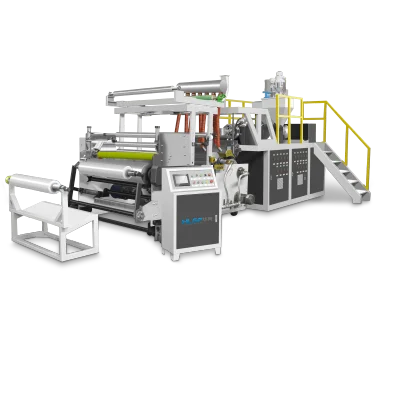
The 3-Layer Stretch Film Manufacturing Machine is designed to produce high-performance stretch films through precise three-layer co-extrusion technology. Each layer within the film structure performs a specific function, allowing manufacturers to customize film properties according to different packaging requirements.
The core layer is responsible for providing mechanical strength and resistance against puncture damage. For heavy chemical drums, this layer helps the film withstand concentrated pressure and external impact during transportation. The optimized material distribution improves the overall durability of the finished film.
The outer layers are designed to provide strong cling performance and stable wrapping characteristics. Effective cling between film layers ensures that multiple wrapping layers remain connected after application, helping maintain consistent containment force around drum loads.
Compared with traditional single-layer production methods, a three-layer structure offers greater flexibility in material selection and film design. Manufacturers can adjust each layer according to application requirements, such as increasing strength performance, improving stretch capability, or optimizing surface adhesion.
This structure is especially suitable for industrial packaging markets where film performance, production efficiency, and material savings are equally important.
Improving Film Quality Through Precision Stretch Film Manufacturing Machine
Producing reliable stretch film for chemical drum packaging requires not only advanced material structures but also accurate manufacturing control. The 3-Layer Stretch Film Manufacturing Machine integrates precision extrusion technology and automated control systems to maintain stable production conditions.
During extrusion, accurate temperature control and pressure management help ensure uniform melt distribution across each layer. Stable extrusion performance reduces thickness variation and prevents weak areas that may cause film failure during packaging operations.
The machine’s precision winding system also plays an important role in maintaining consistent roll quality. Uniform winding tension ensures that finished rolls maintain stable film properties from the beginning to the end of production. This improves packaging consistency for customers using automated wrapping systems or high-volume packaging lines.
Advanced control systems allow operators to monitor and adjust production parameters efficiently. By maintaining stable film thickness, layer distribution, and winding performance, the equipment helps manufacturers achieve reliable output quality while reducing production waste.
Supporting Lightweight and Efficient Chemical Drum Packaging
One of the major advantages of three-layer stretch film technology is the ability to achieve effective down-gauging. By combining multiple functional layers, manufacturers can produce thinner films while maintaining the strength required for heavy-duty packaging applications.
For example, a properly engineered three-layer stretch film with a thickness of approximately 80 microns may provide comparable or improved packaging performance compared with a much thicker conventional film, depending on formulation and application conditions. This allows packaging companies to reduce raw material usage without sacrificing load stability.
Material efficiency is becoming increasingly important as industries focus on cost control and sustainable production. A stretch film manufacturing machine capable of producing optimized multi-layer films helps manufacturers respond to market demand for lighter, stronger, and more economical packaging solutions.
3-Layer Stretch Film Manufacturing Machine for Chemical Drum Packaging
The growing demand for reliable industrial packaging requires film manufacturers to adopt production equipment that can deliver both performance and efficiency. Chemical drum packaging applications require stretch films with excellent puncture resistance, stable containment force, and consistent quality across large production volumes.
The 3-Layer Stretch Film Manufacturing Machine provides manufacturers with the capability to produce advanced multi-layer films through precise co-extrusion technology, optimized layer structures, and reliable process control. By supporting the production of high-strength and lightweight stretch films, the machine helps companies expand their industrial packaging solutions while improving material efficiency.
For manufacturers seeking to produce premium stretch films for chemical drums, heavy industrial goods, and other demanding applications, investing in a reliable stretch film manufacturing machine offers a practical pathway to improving product quality and market competitiveness. With advanced three-layer production technology, manufacturers can create packaging films that deliver stronger protection, stable performance, and long-term value for modern logistics requirements.