Stretch Film Manufacturing Machine for PBAT-Based Fully Biodegradable Agricultural Mulch Film

2026-07-30

The global agricultural industry is moving toward more sustainable cultivation methods, creating increasing demand for fully biodegradable agricultural mulch film. Traditional polyethylene mulch film has been widely used for moisture retention, weed control, and soil temperature regulation, but plastic residue accumulation and difficult recycling processes have become major environmental concerns. As governments and growers pay more attention to soil protection and circular agriculture, PBAT-based biodegradable mulch film is becoming an important alternative solution.

However, producing high-performance biodegradable agricultural film requires more than biodegradable raw materials. PBAT polymers have different rheological characteristics compared with conventional polyethylene materials, requiring precise extrusion conditions, stable melt processing, and advanced film-forming technology. A professional stretch film manufacturing machine provides the specialized production capability needed to process PBAT materials efficiently while maintaining consistent film quality, mechanical performance, and biodegradation characteristics.

Problems of Traditional Agricultural Mulch Film Production

Conventional plastic mulch film has supported modern farming for decades due to its low cost and reliable physical properties. However, the disposal of used plastic film remains a significant challenge, especially in large-scale agricultural applications. Thin PE mulch films are easily damaged during field use, making complete recovery difficult after harvest. Remaining plastic fragments can accumulate in soil, affecting long-term soil quality and creating additional cleaning costs for farmers.

For organic farming and sustainable agricultural systems, traditional plastic mulch film presents even greater limitations. Growers increasingly require materials that can provide effective crop protection while reducing environmental impact. Fully biodegradable mulch film made from PBAT-based polymers addresses this demand by offering similar agricultural functions without creating persistent plastic waste after its service period.

Despite its environmental advantages, biodegradable film production introduces new technical challenges for manufacturers. PBAT and other bio-based polymers are more sensitive to processing temperature, shear force, and residence time inside the extrusion system. Excessive heat exposure or unstable material flow can cause polymer degradation, gel formation, and inconsistent film thickness, directly affecting the final performance of agricultural mulch film.

These challenges mean that standard plastic film production equipment may not achieve the stability required for commercial biodegradable film manufacturing. Manufacturers need a stretch film manufacturing machine specifically designed to handle the processing characteristics of PBAT materials.

The Role of PBAT-Based Biodegradable Mulch Film in Modern Agriculture

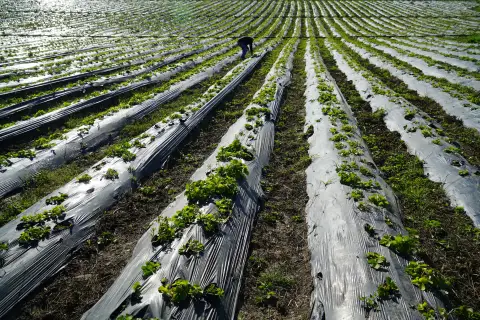
PBAT-based fully biodegradable agricultural mulch film provides farmers with an environmentally responsible solution while maintaining the essential functions required for crop production. During cultivation, the film helps reduce water evaporation, maintain soil temperature, and suppress weed growth, creating more favorable conditions for plant development.

For high-value specialty crops such as strawberries, tomatoes, peppers, and leafy vegetables, biodegradable mulch film helps improve field management efficiency while supporting sustainable production practices. These crops often require precise environmental control, and customized film structures can provide suitable moisture retention and light transmission properties for different growing conditions.

In large-scale agricultural applications, including maize, cotton, and other broadacre crops, biodegradable mulch film must provide sufficient mechanical strength to withstand mechanical installation and field conditions. Multi-layer film structures allow manufacturers to balance durability, flexibility, and biodegradation performance by assigning different functions to individual layers.

For organic farming and controlled environment agriculture, biodegradable mulch film also supports certification requirements by reducing concerns related to plastic contamination. Through optimized formulation and advanced manufacturing technology, producers can supply films designed for specific agricultural applications while maintaining consistent quality.

How Stretch Film Manufacturing Machine Enables High-Quality PBAT Mulch Film Production

A specialized stretch film manufacturing machine plays a critical role in converting PBAT-based materials into reliable agricultural mulch film. Unlike conventional film extrusion systems, advanced equipment focuses on precise control of melting, conveying, stretching, and winding processes to protect sensitive bio-polymer materials throughout production.

The extrusion system is designed to provide stable material plasticization and uniform melt pressure. Optimized screw configurations help achieve efficient melting while reducing unnecessary shear stress on biodegradable polymers. Accurate temperature control throughout the barrel and die system prevents overheating and supports stable material flow, reducing the risk of degradation and gel defects.

For PBAT agricultural mulch film production, thickness consistency is one of the most important quality factors. Uneven film thickness can affect mechanical strength, field performance, and biodegradation behavior. A high-performance stretch film manufacturing machine integrates precise extrusion control and stable casting technology to maintain uniform gauge distribution across the entire film width.

Multi-layer production capability further improves the flexibility of biodegradable film manufacturing. Depending on customer requirements, 2-layer, 3-layer, or 5-layer configurations can be applied to produce films with different functional characteristics. Outer layers can improve mechanical strength and environmental resistance, while inner layers can optimize material usage and production cost.

This structure allows manufacturers to develop customized biodegradable mulch films for different agricultural environments. For example, films used in mechanical laying applications may require higher tensile strength and puncture resistance, while films for greenhouse cultivation may focus more on optical properties and controlled degradation performance.

Samples of Stretch Film Machine

Advanced Film Performance for Agricultural Field Applications

The quality of biodegradable mulch film directly determines its effectiveness in real agricultural environments. A reliable stretch film manufacturing machine helps manufacturers produce films with the mechanical properties required for practical field use.

High tensile strength and elongation performance allow the film to withstand installation processes performed by agricultural machinery. During field operations, mulch film may experience stretching, soil pressure, and contact with crop residues. Stable film properties help reduce tearing and improve application efficiency.

Puncture resistance is another important requirement for agricultural mulch film. Uneven soil surfaces, plant residues, and mechanical handling can create stress points on the film surface. Through accurate layer distribution and controlled extrusion conditions, manufacturers can produce stronger biodegradable films suitable for demanding agricultural applications.

In addition, precise material dosing and process control enable manufacturers to adjust degradation performance according to crop cycles. The film can maintain functional performance during the growing period and gradually break down after completing its agricultural purpose, reducing the need for manual removal.

Production Efficiency and Operational Benefits

Beyond film quality, production efficiency is a key factor for biodegradable film manufacturers. PBAT materials generally have higher raw material costs than conventional plastics, making efficient processing and material utilization essential for maintaining competitiveness.

A modern stretch film manufacturing machine supports efficient production through optimized material management and automated operation. Integrated edge-trim recycling systems help return production waste into the manufacturing process, reducing material loss and improving overall resource utilization.

Flexible production capability also allows manufacturers to respond quickly to different market requirements. The equipment can support the production of transparent biodegradable film, black mulch film, and other functional agricultural film types with minimal adjustment time. This flexibility enables producers to serve multiple agricultural sectors using one advanced production platform.

Automatic winding systems and stable film handling technology ensure consistent jumbo rolls suitable for industrial distribution and agricultural applications. Continuous production stability reduces downtime and improves overall manufacturing efficiency.

Reliable PBAT Film Manufacturing Solutions

The future of sustainable agriculture depends not only on innovative biodegradable materials but also on advanced manufacturing technology that can transform these materials into reliable products. PBAT-based fully biodegradable agricultural mulch film requires precise processing control, stable extrusion performance, and consistent quality management throughout production.

Our professionally designed stretch film manufacturing machine provides the technical foundation for producing high-performance biodegradable mulch film. With optimized extrusion technology, multi-layer production capability, accurate thickness control, and efficient operation, the equipment helps manufacturers meet the growing demand for sustainable agricultural solutions.

Stretch Film Manufacturing Machine for PBAT-Based Fully Biodegradable Agricultural Mulch Film

GET IN TOUCH NOW

*We respect your privacy. When you submit your contact information, we agree to only contact you in accordance with our Privacy Policy.