Packaging Challenges for Plastic Components in Industrial Manufacturing
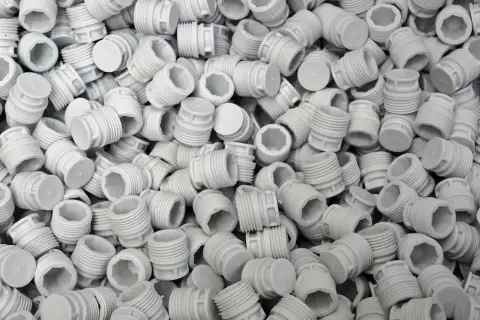
Plastic injection molding, automotive components, and consumer electronics industries require reliable packaging solutions to protect products with different shapes, surface finishes, and structural characteristics. Many plastic parts, including automotive interior trims, appliance housings, electronic components, and precision injection-molded products, have complex geometries with curved surfaces, sharp edges, mounting structures, and thin-wall sections. During storage and transportation, these characteristics create higher requirements for packaging materials.
Traditional packaging methods, such as standard stretch film wrapping combined with additional protective materials, may not always provide an ideal balance between load stability, surface protection, and material efficiency. When plastic components are packed on pallets, uneven surfaces and protruding edges can create concentrated stress points during wrapping. If the film lacks sufficient puncture resistance or elasticity, tearing may occur during transportation, reducing the stability of the palletized load.
Surface protection is another important consideration for plastic parts manufacturers. High-gloss automotive trims, electronic housings, and decorative plastic components are sensitive to scratches, dust, and contamination. Excessive film adhesion or friction between packaging materials and product surfaces may affect appearance quality, especially for components used in industries with strict visual inspection standards.
In addition, many plastic processing companies are focusing on reducing packaging waste and improving production efficiency. This has increased demand for stretch films that provide stronger performance with optimized material consumption. Producing these films requires advanced extrusion technology capable of combining different polymer properties within a single structure.
The Importance of High-Performance Stretch Film for Plastic Component Packaging
Stretch film plays an important role in securing plastic components during handling, warehousing, and transportation. Compared with conventional packaging methods, high-performance stretch film provides consistent wrapping tension, improved load stability, and better protection against external environmental factors.
For plastic parts packaging, the key advantage of technical stretch film is its ability to combine elasticity, holding force, and puncture resistance. A properly designed film can maintain stable tension around palletized products while adapting to irregular load shapes. This helps reduce product movement during transportation and minimizes the risk of surface damage caused by shifting between individual components.
Advanced stretch films can also be customized with different functional properties through polymer selection and layer design. For example, a film structure can be optimized to provide stronger outer-layer toughness while maintaining a softer inner surface for contact with sensitive products. This approach allows manufacturers to achieve better packaging performance without relying on excessive film thickness.
For plastic component suppliers serving automotive, electronics, and industrial markets, consistent packaging quality is essential for maintaining delivery standards. A stable stretch film production process enables packaging material manufacturers to provide reliable products that meet the requirements of different application environments.
Producing Functional Stretch Film with a 2-Layer Stretch Film Manufacturing Machine
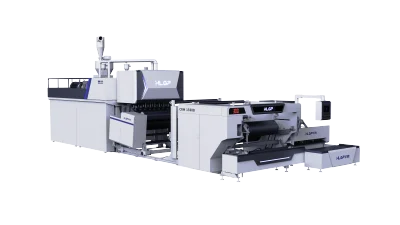
A 2-layer stretch film manufacturing machine provides an efficient solution for producing customized stretch films with different properties between the inner and outer layers. Through co-extrusion technology, two polymer materials can be processed simultaneously, allowing each layer to perform a specific function.
The inner layer is typically designed for controlled cling performance. For plastic component packaging, the film should provide sufficient holding ability while avoiding excessive adhesion that could leave residue or affect surface appearance. By selecting suitable resin formulations and additives, manufacturers can produce films that maintain secure wrapping performance while protecting sensitive plastic surfaces.
The outer layer focuses on mechanical strength and durability. It can be engineered to improve puncture resistance, tear resistance, and overall film toughness. This is especially valuable when packaging components with sharp corners, edges, or complex structures that may create stress during transportation.
The co-extrusion structure produced by a 2-layer stretch film manufacturing machine allows packaging film manufacturers to optimize performance without increasing unnecessary material usage. Instead of producing a single-layer film that must compromise between multiple properties, the two-layer structure enables more precise material distribution.
In addition to layer design, stable production control is essential for achieving consistent film quality. Modern stretch film manufacturing machines are equipped with precision temperature control systems, accurate extrusion components, and reliable winding systems to maintain uniform film thickness and stable mechanical properties.
During production, parameters such as extrusion temperature, cooling conditions, and winding tension directly influence the final film performance. A well-designed 2-layer stretch film manufacturing machine helps manufacturers maintain production consistency and reduce variations between different film batches.
Improving Packaging Efficiency and Material Utilization
For plastic component packaging manufacturers, improving material efficiency has become an important part of production optimization. High-performance stretch films produced by advanced co-extrusion equipment can help reduce unnecessary material consumption while maintaining required packaging performance.
Compared with thicker conventional films, optimized two-layer stretch films can achieve better balance between strength and thickness. The improved mechanical properties allow packaging operators to use appropriate film specifications according to different load requirements, helping reduce raw material costs and packaging waste.
The production flexibility of a 2-layer stretch film manufacturing machine also supports a wider range of applications. By adjusting resin combinations, layer ratios, and processing parameters, manufacturers can develop films for different industries, including automotive parts, electronic components, household appliances, and general industrial products.
For companies producing packaging materials, this flexibility creates opportunities to respond to changing customer requirements. Different plastic components may require different levels of cling force, elasticity, and puncture resistance, and co-extrusion technology provides a practical way to achieve these variations through controlled film structures.
Supporting Cleaner and More Reliable Plastic Parts Transportation
Plastic component manufacturers increasingly require packaging solutions that support cleaner logistics processes. During transportation and storage, dust, moisture, and external contaminants can affect product quality, particularly for components used in automotive interiors, electronics, and precision assemblies.
Stretch film provides a protective barrier that helps reduce exposure to environmental contamination. When combined with suitable material formulations, the film can improve packaging reliability and support cleaner handling conditions throughout the supply chain.
For manufacturers producing technical plastic components, consistent packaging quality contributes to fewer product handling issues and improved customer satisfaction. The ability to produce reliable stretch film with controlled performance characteristics has become an important advantage for packaging suppliers serving demanding industrial markets.
Advanced 2-Layer Stretch Film Manufacturing Machine
A reliable 2-layer stretch film manufacturing machine provides packaging film producers with the capability to develop high-performance films for modern plastic component packaging requirements. Through accurate extrusion control, optimized co-extrusion technology, and stable winding performance, these machines help manufacturers achieve consistent film quality and flexible production options.
Designed for companies seeking efficient and customized stretch film production solutions, advanced equipment supports the manufacturing of films with balanced strength, elasticity, and protective performance. With professional technical support, suitable machine configurations, and application-focused solutions, manufacturers can improve production efficiency and provide high-quality stretch film products for automotive, electronics, and industrial packaging markets.