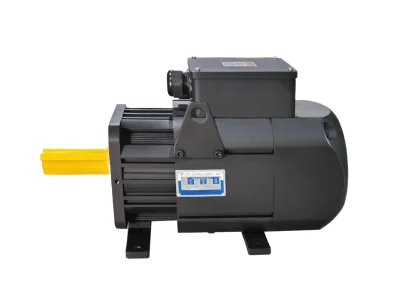
Permanent Magnet Synchronous Motors, or PMSMs, have quietly become one of the most important pieces of technology hidden inside modern packaging machinery. At their core, PMSMs use permanent magnets embedded in the rotor to lock onto a rotating magnetic field, allowing the rotor to spin in perfect step with the electrical input. In an industry where stretch film and bubble film gauge, tension, and line speed all depend on motor precision, this synchronization is no small detail — it's the difference between consistent production and constant troubleshooting.
The Problem With Traditional Motors in Stretch Film and Bubble Film Production
For decades, induction motors have been the default choice for driving extrusion lines and winding systems. They work by inducing a current in the rotor through electromagnetic induction, which means the rotor always lags slightly behind the stator's rotating magnetic field. This lag, known as slip, is not just a technical footnote — it has real consequences on a production floor.
Because induction motors rely on rotor current to generate torque, a portion of the electrical energy supplied is inevitably lost as heat inside the rotor windings. On a machine running continuously for 8,12,or 24 hours a day, that heat adds up, straining bearings, insulation, and cooling systems over time. Slip also means the motor's actual speed shifts slightly under varying load conditions, which translates directly into fluctuating line speed. For an operator trying to hold a tight gauge tolerance on a stretch film or bubble film line, even a small variation in motor speed can show up as visible inconsistency in the finished roll.
There's also the maintenance side of the equation. Traditional motors tend to have more moving parts subject to wear, and their lower efficiency means more energy is converted to waste heat rather than useful mechanical work. Over the service life of a production line, this adds measurable cost — both in electricity bills and in unplanned downtime for repairs.
Why Precision Motor Technology Matters for Stretch Film and Bubble Film Extrusion
Bubble film and stretch film production are both processes where timing is everything. In bubble film manufacturing, the extrusion speed and the pulling (haul-off) speed of the bubble film have to be matched with a high degree of accuracy. If the motor driving either stage drifts even slightly, the result is uneven bubble formation, inconsistent bubble film gauge, or air pockets that don't hold their shape properly.
Stretch film production has its own version of this challenge, centered on tension control during winding and rewinding. Because stretch film is designed to be pre-stretched and wound under controlled tension, any speed inconsistency in the winding motor can lead to loose, telescoping rolls or, at the other extreme, stretch film that snaps under excessive tension. Both outcomes mean wasted resin and lost production time.
This is exactly where PMSM technology earns its place. Because the rotor's permanent magnets lock directly onto the stator's rotating field, there is no slip to compensate for. The motor's actual speed matches the commanded speed almost instantaneously, which gives control systems a much tighter, more predictable process variable to work with. Combined with the lower heat generation that comes from eliminating rotor excitation current, PMSMs are ideally suited to the kind of continuous, high-precision production runs that stretch film and bubble film extrusion demands.
How PMSM Technology Is Applied Differently Across the Two Machine Types
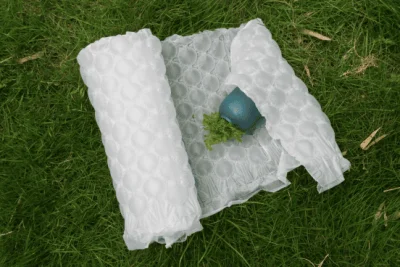
While the underlying motor principle is the same, the way PMSM technology is put to work looks different depending on whether it's driving a bubble film line or a stretch film line. On a bubble film line, PMSM technology drives the extrusion screw and pulling rollers, with the main control objective being to match extrusion output rate with haul-off speed. Motor slip here shows up as uneven bubble size and inconsistent bubble film gauge, so the key advantage PMSM brings is near-instant speed response for tight process synchronization — which translates into reduced energy loss during continuous multi-layer extrusion, more uniform bubble formation, and tighter gauge accuracy.
On a stretch film line, the same motor technology instead drives the winding/rewinding shaft and pre-stretch rollers, where the priority shifts to maintaining consistent stretch film tension throughout winding. Here, motor slip risks loose or telescoping rolls and web breaks, so PMSM's high-precision torque control becomes the critical advantage for holding tension stable. The payoff shows up as lower motor heat during long, high-speed production runs, along with a tighter roll structure and reduced material waste.
In short, the same underlying motor principle — synchronous, slip-free rotation — gets applied to two very different mechanical challenges. In one case it's about keeping extrusion and pulling speeds in lockstep; in the other, it's about holding tension steady across an entire roll of stretch film.
PMSM Integration in Our Bubble Film and Stretch Film Machines
Our bubble film machines use PMSM drives on the extrusion and haul-off systems, where speed synchronization has the most direct effect on product quality. Because the rotor tracks the stator field without lag, the pulling speed stays locked to the extrusion rate even as line speed changes, which keeps bubble diameter and bubble film gauge within a tighter tolerance across long production runs. The reduced rotor heating also means the drive system can sustain higher continuous speeds without the thermal derating that often limits traditional motor setups.
On our stretch film machines, PMSM technology is applied primarily to the winding and pre-stretch stations, where tension control determines the final quality of the roll. The fast torque response of a PMSM allows the tension control system to react to changes in stretch film width or stretch ratio almost immediately, rather than compensating after the fact. This results in rolls that maintain consistent hardness from core to outer wrap, with fewer instances of telescoping or edge slippage during transport.
Across both machine types, the practical outcome is the same: lower energy consumption per meter of stretch film or bubble film produced, reduced heat-related wear on drive components, and a level of speed control that supports tighter gauge tolerances. For manufacturers running multiple shifts, these gains compound quickly — both in electricity costs and in the reduced scrap rate that comes from more stable machine behavior.
Choosing Equipment Built Around Reliable Motor Technology
Motor technology isn't usually the first thing buyers ask about when comparing stretch film and bubble film lines, but it quietly determines a lot of what happens downstream — energy costs, film gauge consistency, and how much unplanned downtime a production line experiences. PMSM-driven systems address the core weaknesses of traditional motors directly, and that shows up in day-to-day performance rather than just on a spec sheet.
If you're evaluating new bubble film lines or stretch film lines for your facility, it's worth looking closely at how the motor systems are designed, not just the headline line speed. Our engineering team can walk you through the specific PMSM configurations used across our bubble film and stretch film equipment lines, and help you match a machine setup to your production requirements. Reach out to discuss your application, and we'll help you find the right configuration for your facility.