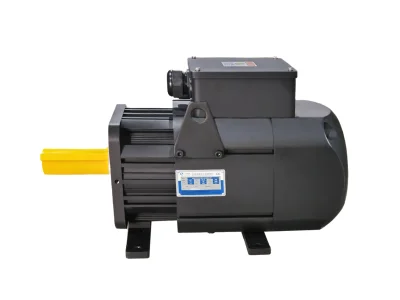
Differences Between Permanent Magnet Synchronous Motors and Asynchronous Motors
2026-07-28
As film manufacturers continue to demand higher production efficiency, more stable film quality, and lower operating costs, advanced drive technology has become an essential part of modern extrusion equipment. In continuous film production, the motor system directly influences extrusion stability, tension control accuracy, and overall energy performance.
Permanent Magnet Synchronous Motor (PMSM) technology provides significant advantages for high-performance film extrusion applications. By using permanent magnets in the rotor design, PMSM systems achieve higher energy efficiency, more precise speed control, and faster response compared with traditional drive solutions. These advantages make PMSM an ideal choice for stretch film making machines and bubble film making machines that require stable operation under long production cycles.
Limitations of Traditional Asynchronous Motors in Film Production
Asynchronous motors, also known as induction motors, have been widely applied in industrial machinery due to their simple structure, durability, and relatively low maintenance requirements. However, their operating characteristics create certain limitations when used in high-precision film extrusion applications.
One of the main characteristics of asynchronous motors is rotor slip. The rotor speed is slightly lower than the rotating magnetic field generated by the stator, and this difference is necessary for torque generation. While this operating principle is suitable for many industrial applications, it may reduce speed regulation accuracy when precise synchronization is required.
In film extrusion processes, small variations in motor speed can influence the stability of extrusion output, traction speed, and winding tension. For applications requiring consistent film thickness and stable roll quality, maintaining accurate speed control is particularly important.
Another consideration is energy efficiency. Traditional induction motors require magnetizing current to generate the magnetic field, which creates additional electrical losses. Under variable load conditions or frequent speed adjustments, these losses may reduce overall system efficiency compared with more advanced motor technologies.
For manufacturers operating continuous production lines, these efficiency differences can become more significant over long operating periods, especially when multiple motors are used throughout the extrusion system.
Technical Advantages of Permanent Magnet Synchronous Motors
Permanent Magnet Synchronous Motors use permanent magnets integrated into the rotor to generate the magnetic field required for operation. Unlike asynchronous motors, PMSM systems do not require rotor excitation current, which helps reduce certain electrical losses.
One of the main advantages of PMSM technology is higher energy efficiency. The improved motor structure allows more electrical energy to be converted into mechanical output, making PMSM suitable for applications where equipment operates continuously for extended periods.
In addition to energy efficiency, PMSM provides more accurate speed and torque control. Because the rotor operates synchronously with the magnetic field, the motor can respond more precisely to changes in production requirements. This characteristic is valuable in film extrusion equipment, where stable speed coordination between different processing sections directly affects product quality.
The lower rotational inertia of many PMSM designs also allows faster response during acceleration and deceleration. This helps automated control systems adjust operating conditions more effectively when production parameters change.
PMSM Benefits for Stretch Film Making Machines
For a stretch film making machine, stable motor performance is essential because the extrusion, stretching, and winding processes must operate in coordination.
During stretch film production, the extrusion screw requires consistent rotational speed to maintain stable polymer output. Variations in screw speed may influence melt pressure and film thickness uniformity. By providing accurate speed control and stable torque output, PMSM drives help maintain more consistent extrusion conditions.
The winding and traction systems also benefit from improved motor control. Stretch film production requires precise tension management to achieve the desired stretching ratio and roll quality. If the winding speed changes unexpectedly, problems such as uneven tension, wrinkles, or unstable roll formation may occur.
With accurate torque regulation and responsive speed adjustment, PMSM-driven systems support smoother coordination between extrusion, cooling, stretching, and winding sections. This helps manufacturers improve production stability and maintain consistent film performance during long production runs.
For multi-layer stretch film applications, precise motor control becomes even more important because different extrusion units and processing sections must work together to maintain uniform layer distribution and stable mechanical properties.
Improving Bubble Film Production with Advanced Motor Technology
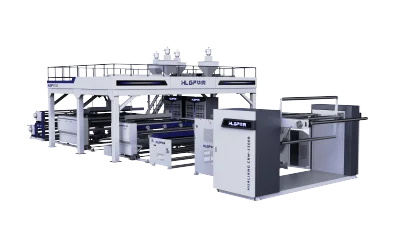
A bubble film making machine also benefits from stable and efficient motor performance. Bubble film production requires continuous extrusion output and precise coordination between the extruder, forming section, cooling system, and take-up unit.
The stability of the extrusion screw directly affects the consistency of the molten polymer flow. If the motor speed fluctuates, the output pressure may change, influencing bubble formation and film thickness.
PMSM technology helps maintain more stable screw operation by providing accurate speed control and efficient power transmission. This supports more consistent bubble height, uniform film structure, and reliable cushioning performance.
Energy efficiency is another important consideration for bubble film manufacturers. Since bubble film production lines often operate continuously for long periods, reducing unnecessary energy losses in drive systems can contribute to lower operating costs over the equipment lifecycle.
Comparing PMSM and Asynchronous Motors for Film Extrusion Applications
Both PMSM and asynchronous motors have their own advantages depending on application requirements. Asynchronous motors remain a practical choice for many standard industrial machines because of their proven reliability and simple maintenance characteristics.
However, for modern high-efficiency film extrusion equipment, PMSM technology provides additional advantages in areas such as energy performance, control precision, and response speed.
The choice of motor system should consider factors including production capacity, operating hours, control requirements, and long-term efficiency goals. For manufacturers producing high-quality stretch films and bubble films, advanced motor technology can provide better support for stable and efficient operation.
A well-designed extrusion line combines motor performance with other critical technologies, including temperature control, extrusion screw design, automation systems, and winding control. Motor selection is one important part of achieving reliable overall machine performance.
Advanced Motor Solutions for High-Performance Film Extrusion Machines
Motor technology plays an important role in improving the efficiency and stability of modern plastic film production equipment. By improving energy utilization, speed control accuracy, and dynamic response, Permanent Magnet Synchronous Motors provide valuable advantages for high-performance extrusion applications.
Our stretch film making machines and bubble film making machines are designed with advanced drive systems and optimized mechanical structures to meet the requirements of modern packaging film production. Through reliable motor selection, precise control systems, and stable extrusion technology, our equipment helps manufacturers achieve consistent film quality, efficient operation, and long-term production reliability.
Whether producing industrial stretch film for logistics packaging or protective bubble film for transportation applications, our machines provide a dependable solution for manufacturers seeking improved productivity, reduced operating costs, and stable performance in continuous production environments.