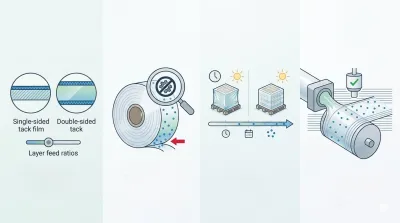
Stretch Film Extrusion Machines: Controlling PIB Cling Layer
2026-06-30
The global demand for high-performance pallet packaging has driven manufacturers to push the limits of linear low-density polyethylene (LLDPE) formulations. At the heart of industrial packaging performance is the cling layer, which ensures the film adheres securely to itself during high-speed transit. Polyisobutylene (PIB) remains the industry-standard liquid tackifier utilized to achieve this critical self-adhesion.
However, incorporating liquid PIB into high-speed line production presents severe technical hurdles. Traditional cast line equipment often fails to distribute the viscous additive uniformly across the melt stream. This lack of precision directly threatens the structural integrity of the finished pallet wrap, leading to inconsistent performance and diminished market value.
To remain competitive in today's automated logistics landscape, plastic producers must transition to modern cast line architectures. Our advanced machinery addresses these core compounding and thermal challenges at the molecular level, transforming a volatile chemical variable into a predictable, highly controllable production standard.
Technical Bottlenecks in Traditional Liquid Additive Compounding
Standard manufacturing lines frequently struggle with the high viscosity and thermal sensitivity of liquid tackifiers. When traditional extruders process these additives, mechanical shear forces often fluctuate, leading to a phenomenon known as surging. This instability generates alternating bands of over-concentrated tack and completely dry zones across the web width.
Uncontrolled additive migration represents another critical failure point for conventional lines. When the resin mixture is not thoroughly homogenized before entering the die slot, the tackifier tends to migrate to the surface prematurely. This early migration contaminates the chill rolls and idler rollers, forcing frequent, unscheduled maintenance shut-downs that slash overall equipment effectiveness (OEE).
Thermal mismanagement further compounds these operational defects. Standard cooling methods fail to lock in the polymer crystalline structure at high linear speeds. The resulting slow thermal dissipation causes large spherulite crystals to form within the polymer matrix, which drastically clouds the optical clarity of the film and creates a hazy, low-grade product that corporate clients reject.
Advanced Nitrided Metallurgy and Barrel Engineering
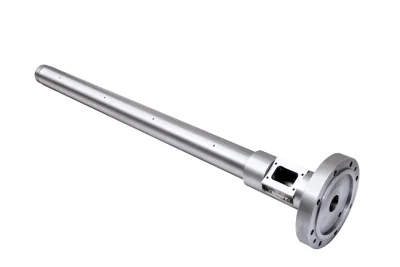
Eliminating melt volatility requires a complete re-engineering of the primary plasticizing components. Modern high-efficiency stretch film extrusion machine utilize high-grade 3CrMoAl alloy steel for both the core screw and the surrounding barrel. This specific chrome-molybdenum-aluminum alloy provides the ideal mechanical foundation needed to withstand the intense hydrodynamic pressures of continuous liquid injection.
To achieve maximum operational longevity, the entire length of the 3CrMoAl screw and barrel undergoes a specialized, multi-stage gas nitriding treatment. This advanced thermal process diffuses nitrogen into the steel surface, creating an ultra-hard, wear-resistant outer casing. The nitrided layer protects the internal components against the abrasive elements often found in recycling resins while resisting the corrosive nature of concentrated liquid additives.
Beyond material strength, the screw geometry is precisely machined with specialized mixing elements. These barrier zones subject the LLDPE pellets and injected liquids to intense distributive and dispersive mixing. The result is a perfectly homogenized melt stream that delivers an exceptionally uniform distribution of the tackifier, preventing spot-surging and ensuring a flawless single-sided or double-sided cling effect.
High-Velocity Water Cooling Systems for Optical Excellence
Achieving premium optical properties at high output rates depends entirely on the design of the post-extrusion cooling phase. State-of-the-art cast lines discard unreliable ambient air cooling in favor of an integrated, high-velocity circular water cooling system. This closed-loop configuration provides immediate thermal shock to the molten web as it exits the T-die lip.
The rapid thermal quenching provided by the circulating water apparatus instantly halts the growth of large polymer crystals. By freezing the polymer chain orientation in a highly amorphous state, the system minimizes internal light scattering. This advanced thermodynamic control guarantees exceptional film clarity and gloss, allowing end-users to easily scan barcodes through multiple layers of wrapped pallets.
Furthermore, the uniform temperature profile maintained across the face of the cooling drum prevents localized thermal stress. This precise cooling ensures that the subsequent migration of the tackifier occurs at a highly controlled, predictable rate during the post-production curing phase. Manufacturers can finally eliminate uneven film tension and roll telescoping, yielding perfectly flat, market-ready master rolls.
Operational Advantages of Modern Cast Co-Extrusion Systems
Integrating nitrided metallurgy and high-efficiency water cooling translates directly into massive commercial advantages for plastic packaging producers. By stabilizing the internal melt dynamics, these advanced lines dramatically reduce raw material waste. Operators can calibrate the exact dosage of expensive liquid additives to the absolute minimum required, saving thousands of dollars in monthly resin costs.
Production uptime receives a massive boost due to the self-cleaning characteristics of the nitrided surfaces and optimized flow channels. Because the tackifier does not degrade or form carbon crusts inside the barrel, the interval between mandatory screw teardowns is extended by over three hundred percent. This exceptional reliability allows factories to run continuous, high-volume production schedules without fearing sudden drops in film quality.
Finally, the mechanical harmony of these systems supports sustained high-speed winding without compromising the mechanical properties of the web. The final film exhibits excellent tensile strength, high elongation parameters, and superior puncture resistance. These structural qualities, combined with pristine clarity and reliable cling forces, position the finished product at the absolute top tier of the industrial packaging market.
Future-Proofing Soft Packaging Production
The industrial packaging sector is rapidly moving toward thinner, multi-layer architectures that demand absolute precision from processing machinery. Investing in cast lines equipped with nitrided 3CrMoAl alloy components and targeted water cooling is no longer just an upgrade—it is a baseline requirement for economic survival.
By mastering the complex behavior of liquid tackifiers, these advanced systems empower manufacturers to deliver flawless roll consistency, crystal-clear optics, and reliable load-retention characteristics. Partnering with us ensures your factory remains highly profitable, versatile, and ready to meet the strict packaging standards of tomorrow.