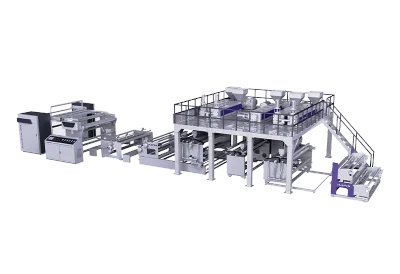
Step-by-Step Guide: How a 7-Layer High Speed Bubble Film Machine Works
2026-08-26
Protective packaging has grown far more demanding over the past decade. E-commerce, electronics, and appliance manufacturers all need cushioning material that performs consistently, protects against moisture and static, and holds up under rough handling in transit. Traditional single-layer or three-layer bubble film equipment was never built for this level of complexity, which is why more manufacturers are moving toward a 7-layer bubble film extrusion machine capable of combining multiple functional materials into one precisely engineered structure. Understanding exactly how this equipment works, step by step, makes it much easier to see why layer count and process control matter so much to final film quality.
Where Traditional Bubble Film Equipment Falls Short
Older bubble film machines, particularly single-layer and basic three-layer systems, struggle to keep up with modern packaging requirements. Their limited layer structure makes it difficult to combine anti-static protection, barrier performance, and mechanical toughening within a single film, forcing manufacturers to compromise on one property to achieve another.
Formulation flexibility is another common weak point. When a machine cannot control multiple raw material streams independently, blending virgin resin, recycled content, and functional additives becomes inconsistent, and that inconsistency shows up directly in the finished roll. Uneven temperature and pressure control during extrusion compounds the problem, producing melt flow that varies from batch to batch and bubble walls that differ in thickness across the width of the film.
On top of that, older winding systems typically require the line to stop for every roll change, which interrupts output and limits daily production capacity. Inconsistent vacuum forming during bubble shaping only adds to the problem, resulting in bubbles that vary in fullness and seals that are not fully reliable. As demand grows for packaging materials that combine cushioning, barrier protection, and static control in one film, manufacturers running outdated equipment increasingly find themselves unable to meet specification requirements at scale.
Why Bubble Film Consistency Matters Across the Supply Chain
Bubble film is the primary line of cushioning protection for fragile, precision, and high-value goods as they move through e-commerce fulfillment centers, electronics production lines, and international shipping routes. Its performance is judged on more than appearance. Bubble fullness and seal integrity determine how effectively the film absorbs shock, resists puncture, and maintains its protective structure over long transit distances.
Because bubble film is used in extremely high volumes, even minor inconsistencies in layer structure, thickness, or seal quality translate into real cost at scale, whether through product damage claims, wasted material, or slower packaging line speeds. Facilities running automated wrapping and packing equipment depend on rolls that behave identically from the first meter to the last. That level of reliability starts well before the film ever reaches a warehouse floor. It begins with how precisely the film was engineered and formed at the extrusion stage, which is exactly where a 7-layer bubble film extrusion machine makes the difference.
How a 7-Layer High-Speed Bubble Film Machine Works, Step by Step
A 7-layer bubble film extrusion machine builds film through a coordinated sequence of independently controlled processes, each one engineered to eliminate the variability found in older, simpler systems.
Raw Material Feeding
Production begins with several extruders feeding different raw materials into the system independently. LDPE, LLDPE, recycled resins, anti-static additives, barrier materials, and toughening agents can each be metered into their own extruder, giving engineers the flexibility to design custom formulations and assign specific functions to specific layers rather than blending everything into a single compromised mix.
Melt Extrusion
Each extruder heats and melts its assigned resin under independently controlled temperature conditions. Because pressure and temperature are managed separately for every material stream, the melt flow entering the die stays stable and uniform, which is essential once multiple polymer streams need to merge into one coherent multi-layer structure.
7-Layer Co-Extrusion Die Forming
The molten polymer streams are directed into a seven-layer distributor and then through a high-precision flat T-die. Inside the die, the individual melt streams merge into a single composite sheet with a clearly defined seven-layer structure, allowing the finished film to deliver mechanical strength, sealing performance, and surface characteristics that a single-layer or three-layer sheet cannot match.
Bubble Formation
The composite sheet then passes through a vacuum bubble forming system, where a vacuum roller shapes the material into uniform air pockets. A sealing layer is applied at the same time to enclose each bubble, which keeps cushioning performance consistent from one bubble to the next across the full width of the roll.
Cooling and Setting
The newly formed bubble film moves into a multi-zone cooling system, where controlled, rapid cooling solidifies the material and locks the bubble structure in place. This stage is critical for dimensional accuracy, since uneven cooling at this point would distort bubble shape before the film ever reaches the winder.
Traction and Slitting
A traction system pulls the film through the line at a constant speed while maintaining steady tension, preventing the stretching or distortion that inconsistent tension would otherwise cause. An inline slitting unit then adjusts film width in real time, allowing one production run to supply multiple packaging specifications without changing equipment.
Winding System
Finally, the finished film is collected by the winding system, which ensures stable roll formation and consistent winding tension throughout production. The system helps maintain uniform roll quality, reduce downtime between rolls, and support stable high-output operation during long production runs.

Technical Advantages Built Into Every Roll
The combination of these steps gives a 7-layer bubble film extrusion machine several advantages that simpler equipment cannot replicate. Multi-layer co-extrusion allows performance and functionality to be engineered layer by layer rather than compromised into a single blend. Independent extruder control keeps processing conditions stable even when multiple raw materials, including recycled content, are used together. Uniform bubble formation keeps cushioning performance consistent roll after roll, while continuous, non-stop winding keeps overall output high. Because material combinations can be adjusted layer by layer, the same machine can be configured to serve a wide range of applications, from everyday e-commerce cushioning to specialized anti-static packaging for electronics.
Engineered for Manufacturers Who Need Precision at Scale
Every stage of this process, from independently controlled raw material feeding through to automatic turret winding, is designed to remove the inconsistency that limits older bubble film equipment. Our 7-layer bubble film extrusion machine is built around exactly this level of process control, with independently regulated extruders, a high-precision seven-layer T-die, uniform vacuum bubble forming, and dual-station turret winding for continuous, high-speed production. Whether your production line needs to combine anti-static protection, barrier performance, and mechanical strength in a single roll, or simply needs the consistency to run reliably at scale, our engineering team can help configure a 7-layer bubble film extrusion machine that matches your material formulation, output targets, and packaging specifications.