High-volume warehouse operations require reliable packaging materials that can maintain load stability throughout storage, handling, and transportation. With increasing demand for automated pallet wrapping and continuous logistics processes, traditional stretch films with inconsistent thickness, limited puncture resistance, or unstable stretching performance may cause packaging failures and unnecessary material consumption.
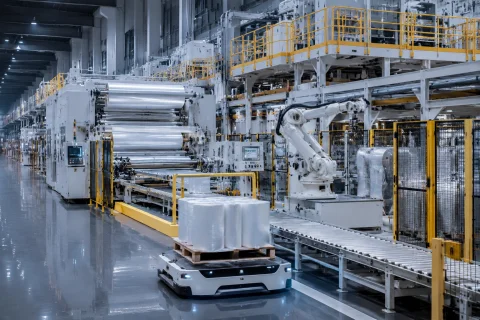
A modern stretch film manufacturing machine provides the production capability required to manufacture high-performance stretch films for industrial warehouse applications. Through advanced multi-layer co-extrusion technology, precise thickness control, and automated winding systems, these machines help manufacturers produce stretch films with improved strength, flexibility, and processing stability for demanding logistics environments.
Packaging Challenges in High-Volume Warehouse Operations
Large-scale warehouses, distribution centers, and third-party logistics facilities handle thousands of pallet loads every day. In these environments, packaging materials must withstand frequent movement by forklifts, automated handling systems, and long-distance transportation. The performance of stretch film directly influences whether goods remain securely positioned during the entire logistics process.
One of the common challenges in warehouse packaging is film breakage during high-speed wrapping. When stretch film lacks sufficient tensile strength or elongation capability, it may snap during machine wrapping, causing production interruptions and additional labor costs. Sharp pallet corners, irregular load shapes, and heavy products can also create concentrated stress points that lead to punctures or tearing.
Another challenge is inconsistent film quality caused by uneven thickness distribution. Traditional film production methods with limited control systems may produce weak areas within the film structure. These areas can reduce holding force and make operators increase the amount of film applied to achieve acceptable load stability, resulting in higher material consumption.
For automated packaging lines, film consistency becomes even more important. Modern warehouses often use automatic pallet wrappers that require stable film tension, predictable stretching behavior, and uniform roll quality. Any variation in film performance can affect packaging efficiency and interrupt continuous warehouse operations.
The Role of Stretch Film in Industrial Warehouse Packaging
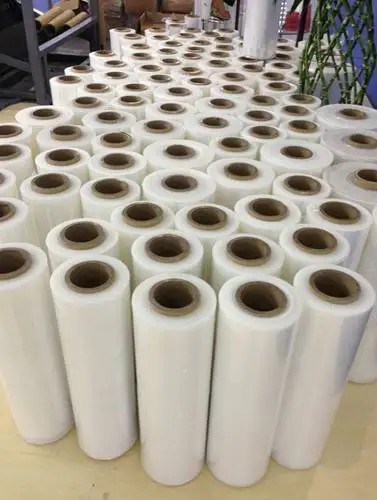
Stretch film plays an important role in securing palletized goods during storage and transportation. By utilizing the elastic recovery force generated after stretching, high-quality stretch film tightly wraps around products and creates a stable packaging unit.
For warehouse applications, the primary function of stretch film is not only to hold products together but also to provide protection during handling. A properly designed film structure helps reduce pallet movement, improve load integrity, and minimize the risk of product damage caused by shifting during transportation.
Multi-layer stretch films have become widely used in industrial packaging because different layers can be designed to provide specific performance advantages. In a 5-layer stretch film structure, for example, the outer layers can be optimized for surface protection and controlled cling, while the core layers provide tensile strength and puncture resistance. This material distribution allows manufacturers to achieve balanced performance without relying on excessive film thickness.
Advanced stretch films produced from materials such as LLDPE and mLLDPE can provide high elongation, strong holding force, and improved resistance against tearing. These properties allow warehouse operators to achieve reliable packaging performance while reducing unnecessary film usage.
How Stretch Film Manufacturing Machine Improves Film Production Efficiency
A stretch film manufacturing machine is designed to transform polymer materials into high-quality stretch films through a controlled cast extrusion process. For manufacturers supplying warehouse packaging markets, machine performance directly affects film quality, production efficiency, and long-term operating costs.
Modern multi-layer co-extrusion technology enables manufacturers to produce 2-layer, 3-layer, and 5-layer stretch films with optimized material structures. Each layer can be adjusted according to application requirements, allowing producers to balance strength, cling performance, transparency, and cost efficiency.
A 5-layer co-extrusion stretch film manufacturing machine typically uses independent extruders to control different polymer combinations. This configuration allows precise layer distribution and supports the application of high-performance materials such as metallocene LLDPE blends. By optimizing the A/B/C/B/A layer structure, manufacturers can produce films with improved puncture resistance and stable stretching performance for heavy-duty warehouse packaging.
For medium-volume packaging applications, 2-layer and 3-layer stretch film machines provide a practical solution by combining production flexibility with efficient material usage. These systems can integrate different resin combinations, including virgin and recycled materials where suitable, helping manufacturers develop cost-effective stretch film solutions for various market requirements.
Precision Thickness Control for Stable Film Quality
Film thickness consistency is one of the most important factors affecting stretch film performance. Uneven gauge distribution can create weak points that reduce packaging reliability and increase waste during production.
A high-performance stretch film manufacturing machine integrates advanced thickness control technologies, including automatic gauge measurement systems and closed-loop adjustment functions. These systems continuously monitor film thickness across the web width and allow automatic correction during production.
Precision control helps maintain stable film specifications, improve roll quality, and reduce variations between production batches. For industrial packaging film manufacturers, this consistency is especially important because warehouse customers often require large quantities of film with reliable performance across different wrapping machines.
The chill roll system also plays an important role in stretch film production. Efficient cooling technology rapidly solidifies the molten polymer after extrusion, helping improve optical clarity, mechanical strength, and dimensional stability. A well-designed cooling system supports higher production speeds while maintaining consistent film properties.
Automated Production Systems for Continuous Industrial Demand
High-volume warehouse operations require a stable supply of stretch film, which means manufacturers need production equipment capable of long-term continuous operation. A modern stretch film manufacturing machine integrates automation systems to improve production efficiency and reduce manual adjustment requirements.
PLC-based control systems allow operators to manage key production parameters, including extrusion speed, melt pressure, temperature control, and winding tension. By synchronizing different machine sections, the system helps maintain stable production conditions and improves operational reliability.
Advanced winding technology further supports efficient film production. Automatic winding systems can produce machine rolls and hand rolls with consistent tension and accurate roll formation. For large-scale film producers, these features help reduce downtime and improve overall production capacity.
Semi-automatic stretch film equipment can also provide an effective solution for manufacturers with medium production requirements. These machines combine reliable mechanical design with convenient operation, making them suitable for businesses that need flexible production capability without requiring a fully automated production line.
Long-Term Benefits of Investing in Stretch Film Manufacturing Machine
For manufacturers serving warehouse logistics markets, investing in a suitable stretch film manufacturing machine provides benefits beyond film production capacity. The right equipment helps improve product quality, reduce production waste, and support stable business growth.
High-quality stretch film production allows manufacturers to supply films with stronger load containment, better puncture resistance, and consistent stretching performance. These advantages help end users reduce packaging failures and improve transportation safety.
Energy efficiency and material utilization are also important considerations in modern film production. Precise extrusion control, optimized layer distribution, and stable winding processes can help reduce unnecessary raw material consumption while maintaining required film performance.
Durable machine construction, reliable extrusion components, and proper maintenance design contribute to long-term production stability. For companies producing industrial stretch films, equipment reliability directly influences delivery capability and customer satisfaction.
Our stretch film manufacturing machine provides the technology needed to produce advanced multi-layer stretch films with stable quality and optimized performance. Through co-extrusion technology, precision thickness control, and intelligent automation systems, these machines help stretch film manufacturers deliver reliable packaging solutions for modern warehouse and logistics applications.