Reducing Total Cost of Ownership (TCO) in Stretch Film Extrusion Plants
2026-05-25
Modern stretch film manufacturing demands a strict balance between premium film quality and rigorous cost control. Traditional extrusion lines often suffer from volatile resin expenses, soaring electricity tariffs, and excessive material waste. Optimizing the total cost of ownership (TCO) in stretch film extrusion plants requires transition to advanced multi-layer co-extrusion technology, energy-saving hardware, and intelligent automation systems that systematically eliminate manufacturing waste.
1. Multi-Layer Co-Extrusion: Maximizing Raw Material Cost Savings
Since resin accounts for the largest share of operating expenses, maximizing material yield is the most direct method to lower TCO. Advanced multi-layer configurations drastically reduce raw material costs without compromising film performance.
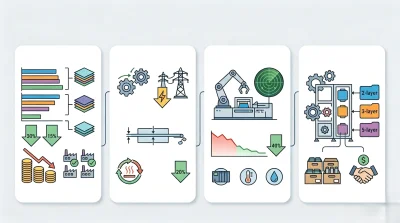
- 5-layer stretch film machine: This configuration distributes mechanical loads across five specialized layers, allowing the integration of cost-effective recycled or functional polymers in the core layers. This advanced engineering achieves up to a 30% reduction in raw material consumption compared to conventional monolayer lines.
- 3-layer stretch film machine: Ideal for standard wrapping applications, this setup delivers consistent gauge control and minimizes neck-in. By stabilizing the film edges, it cuts edge trim waste by up to 15%, returning more usable material to the production cycle.
- 2-layer stretch film machine: Provides a foundational entry point for high-volume, commodity-grade film, securing baseline structural integrity while keeping initial capital expenditure low.
2. Energy Efficiency & Waste Reduction: Cutting Utility Expenses
Electricity consumption represents a continuous drain on plant profitability. Upgrading the core drive and thermal systems delivers compounding monthly utility savings.
Servo-Driven Technology (15–25% Power Savings)
Replacing inefficient hydraulic systems or standard AC motors with advanced servo-driven extruders and pull rolls optimizes power transmission. This hardware configuration slashes electricity consumption by 15% to 25%, directly lowering the manufacturing cost per kilogram of film.
Automatic Gauge Control (AGC) and Reduced Scrap
Advanced AGC systems maintain film thickness within strict ½ micron tolerances. By eliminating over-engineering and material give-away, the plant reduces the standard production scrap rate from 5% to below 1.5%. Less scrap means immediate savings on both resin input and re-granulation energy costs.
Thermal Energy Recovery (20% Energy Reduction)
Integrated heat recovery systems capture exhaust thermal energy generated during the extrusion process. By recycling this heat back into the production platform, the overall energy cost per tonne of finished film drops by up to 20%.
3. Intelligent Automation: Eliminating Downtime and Maintenance Costs
Unscheduled downtime and frequent component replacements quickly inflate TCO. Smart monitoring shifts the plant from reactive to cost-saving preventive maintenance.
- Fully automatic stretch film machine: Features real-time PLC monitoring and predictive algorithms that track bearing temperatures, motor loads, and cooling water flow. Detecting anomalies early reduces unplanned downtime by up to 40%, preventing costly production halts and emergency repair bills.
- Semi-automatic stretch film machine: Automates critical functions like winding tension and gauge control while allowing manual adjustments, minimizing labor costs while retaining high product changeover flexibility.
- Closed-loop cooling systems: High-efficiency cooling rolls and water chillers stabilize the thermal environment. This protects components from thermal degradation, extends machinery lifespan, and reduces coolant consumption costs.
4. Modular Platform: Lowering Lifecycle and Inventory Costs
A standardized equipment architecture prevents future financial strain by streamlining spare parts management and hardware upgrades.
- Interchangeable components: Sharing common frames, drives, and control interfaces across 2-layer, 3-layer, and 5-layer lines cuts spare parts inventory costs by up to 30%.
- Cost-effective future upgrades: The modular layout allows plants to upgrade their extrusion capabilities later without investing in an entirely new base line, protecting the initial capital investment.
Optimize Your Production Economy Today
Reducing TCO is no longer just about cutting budgets—it is about investing in high-efficiency extrusion technology that delivers compounding daily savings. Our state-of-the-art stretch film extrusion lines combine precise multi-layer technology, servo-driven efficiency, and automated gauge controls into a unified, high-performance manufacturing platform.
Whether you need to upgrade to a premium 5-layer co-extrusion system or deploy an agile, energy-saving 3-layer line, our engineering team is ready to design the ideal configuration for your facility. Contact our technical experts today to receive a customized technical proposal and discover how our advanced stretch film machines can maximize your plant's profitability.