Eco-Friendly Maintenance to Maximize Stretch Film Extrusion Machine Efficiency
2026-05-14
Traditional maintenance routines for a stretch film extrusion machine often rely on petroleum-based lubricants and aggressive solvents. Over time, these outdated practices degrade critical machine components, increase energy consumption, and cause inconsistent film gauge thickness.
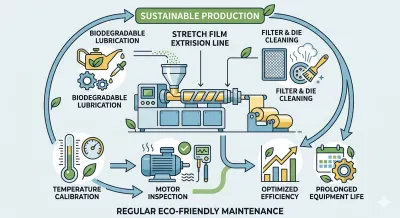
Implementing structured, eco-friendly maintenance protocols resolves these technical bottlenecks. This systematic approach protects your stretch film machine, cuts power draw, and stabilizes high-throughput operations across all production lines.
1. High-Performance Biodegradable Lubrication
Replacing standard gearbox and bearing oils with specialized biodegradable lubricants lowers operational friction inside the drive systems. This practice directly protects high-efficiency motors and transmission components.
- Friction Reduction: Drops friction-induced power losses by up to 12% across the drive train.
- Energy Impact: Lowers total electrical consumption by reducing the mechanical torque required during continuous extrusion.
- Component Lifespan: Extends the service life of internal gears and bearings without generating hazardous chemical waste.
2. Precise Temperature Zone Calibration
Thermal drift in the heating zones causes polymer degradation and forces excessive power draw. Seasonal recalibration of all heating zones ensures uniform heat distribution.
- Precision Control: Maintains strict temperature profiles within ±1°C across the thick-walled barrel and co-extrusion die zones.
- Energy Impact: Seasonal calibration of temperature controllers yields documented energy savings of 8% to 15% by eliminating continuous heater overshooting.
- Quality Consistency: Prevents melt fracture and ensures a consistent film thickness within ±1 micron, allowing 3-layer stretch film machines and 5-layer stretch film machines to maintain optimal film gauge.
3. Sustainable Die and Filter Cleaning
Traditional chlorinated solvents strip protective surface coatings from critical extrusion components. Switching to biodegradable, citrus-based cleaning agents and reusable filter elements maintains optimal melt flow paths safely.
- Die Line Elimination: Thorough, non-corrosive cleaning removes carbonized polymer buildup inside the die lip, completely eliminating cosmetic die lines and surface defects.
- Melt Purity: Reusable stainless steel mesh elements retain maximum melt cleanliness while minimizing industrial solid waste disposal.
- Optical Clarity: Clean flow channels preserve the optical clarity and self-adhesive cling characteristics of the finished stretch film.
4. Roll and Automation Maintenance
Contaminants on primary and secondary chill rolls impair heat transfer and cause winding defects. Regular inspection paired with non-toxic, eco-friendly release agents keeps roll surfaces pristine.
- Cooling Efficiency: Clean chill rolls maximize thermal exchange, allowing the extrusion line to run at full winding speed.
- Automation Sync: Routine inspection of the integrated PLC and automated componentry prevents synchronization errors. This ensures fully automatic stretch film machines and semi-automatic stretch film machines achieve maximum uptime and reduced scrap rates during roll changeovers.