Maintenance Guide: How to Clean the Screw of a Stretch Film Extrusion Machine Properly
2026-07-01
In high-performance cast and blown film production, the extruder screw represents the heart of the entire co-extrusion line. Maintaining this core component is critical to operational profitability and product quality. Even minor, invisible polymer degradation or black carbon accumulation on the screw flights can lead to catastrophic film defects.
For manufacturing facilities operating modern stretch film extrusion machines, implementing a strict, non-destructive cleaning regimen is not just standard maintenance. It is a strict prerequisite for high-yield, zero-defect manufacturing.
Critical Extrusion Deficiencies and the Hidden Failures of Traditional Screw Cleaning
Industrial stretch film production leaves absolutely no margin for melt quality variations. Whether your facility utilizes a standard two-layer co-extrusion system, a high-volume three-layer setup, or an advanced five-layer line, any stagnation in the melt flow channel introduces severe visual and structural vulnerabilities.
The Cost of Polymer Degradation
When linear low-density polyethylene (LLDPE) or specialized tackifier resins dwell too long in dead zones along the screw profile, they begin to degrade thermally. This chemical degradation manifests as severe aesthetic and physical film flaws, including:
- Gels and Black Specks: Carbonized polymer particles break free from the screw root, creating visual defects that trigger optical sorting alarms and customer rejections.
- Poor Gauge Control: Disrupted flow dynamics cause localized pressure fluctuations, leading to uneven film thickness and inconsistent gauge distribution across the web.
- Reduced Mechanical Integrity: Hard contaminants act as stress concentration points, causing premature film tears during high-speed automated wrapping or stretch testing.
The Dangerous Traps of Manual Scrape Methods
When operators face heavy carbon buildup, the temptation to use aggressive mechanical force is high. Traditional maintenance often relies on unapproved workshop tools like steel wool, hardened steel wire brushes, or sharp iron scrapers. These aggressive tools cause permanent, irreversible damage to the extrusion assembly.
Steel scrapers easily score and scratch the delicate nitrided layers or specialized bi-metallic coatings engineered into modern extruder screws. Every micro-scratch instantly becomes a high-risk nucleation point where fresh polymer will stagnate, burn, and degrade during subsequent production runs. This creates a worsening cycle of frequent material degradation, persistent die lines, and constant web breaks.
Furthermore, managing multi-layer stretch film extrusion machines adds substantial complexity. Each individual layer often utilizes resins with varying melt flow indices (MFI) and distinct thermal behaviors. Trying to flush these diverse layers using pure manual labor or generic, single-fraction purge materials without a systematic approach leads to incomplete purging and heavy resin cross-contamination.
Engineering Advantages of Advanced Extrusion Screws and Specialized Maintenance Tooling
Overcoming these systemic extrusion failures requires a dual approach that combines premium component metallurgy with strict, non-destructive cleaning practices. Modern high-output extrusion machinery relies on highly engineered screw geometries and specialized surface treatments to minimize polymer adhesion from the start.
Advanced Metallurgy and Computational Fluid Dynamics
High-tier stretch film extrusion machines utilize screws manufactured from premium steel alloys featuring advanced bi-metallic encapsulation or deep gas nitriding. These advanced metallurgical surface treatments provide exceptional resistance against abrasive wear and chemical corrosion, extending the operational lifespan of the components.
Additionally, the flight profiles are optimized using advanced Computational Fluid Dynamics (CFD). This advanced design eliminates internal stagnant zones, ensuring a continuous, uniform, and self-cleaning first-in, first-out melt flow across the entire length of the screw.
Non-Destructive Cleaning Tooling and Chemistry
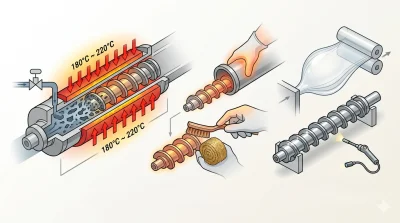
To preserve these pristine, mirror-polished screw surfaces over years of intense production, operators must completely ban all ferrous tools from the maintenance floor. Safe, non-destructive cleaning protocols rely exclusively on soft, non-abrasive materials that scrape away residue without scratching the underlying metal. Approved materials include:
- Pure Brass Wool and Copper Gauze: These soft metals feature a lower hardness rating than nitrided or bi-metallic steel alloys, allowing operators to scrape away softened resins safely.
- Heavy-Duty Brass Wire Brushes: Designed specifically for cleaning the deep roots, tight radii, and complex flight faces of the screw without altering its precise geometric tolerances.
- Engineered Chemical Purging Compounds: Specialized purging formulations act on a molecular level to soften tough carbon bonds, displace degraded polymers, and flush out stubborn pigments without requiring aggressive mechanical scrubbing.
Integrated System Solutions for Seamless Extruder Maintenance
The ultimate solution for maintaining clean extrusion screws lies within the automated control architecture and ergonomic design of modern stretch film extrusion machines. Transitioning from manual cleaning to integrated, automated processes protects your machinery assets while significantly cutting down-time.
Automated Purge Cycles via PLC Control
Modern fully automatic stretch film machinery utilizes advanced PLC-driven purging routines that remove human error from the cleaning process. Instead of relying on manual operator guesswork, the integrated system automatically initiates a precise thermal preparation sequence.
The PLC coordinates controlled temperature ramps, typically stabilizing the barrels between 180°C and 220°C depending on the LLDPE resin grade. The automated system then regulates exact material throughput speeds, running optimized purging cycles at precise shear rates to achieve a complete, deep volumetric flush of the entire barrel.
Streamlined Layer Balancing and Modular Mechanical Design
For advanced five-layer co-extrusion lines, automated systems manage the differing melt flow behaviors of each layer simultaneously. The central control system balances internal pressures and extrusion velocities across all feed blocks and die channels, ensuring that all five layers flush completely and evenly without leaving dead spots behind.
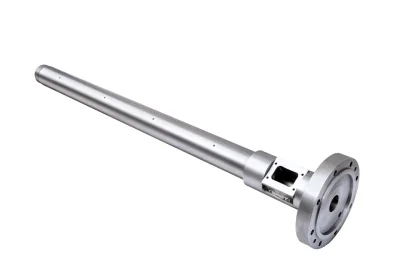
To minimize production downtime, modern machinery features modular mechanical connections between the extruder barrel, the melt pump, and the die assembly. Quick-release flange designs and heavy-duty swing-away gates allow maintenance teams to access the screw quickly while it is still hot. This allows operators to extract the screw smoothly and begin cleaning immediately before the residual polymer can cool, harden, and lock inside the barrel.
Long-Term Operational Benefits of Structural Integrity
Adhering to strict, non-destructive cleaning protocols maintains the exact geometric profile, flight depth, and tight tolerances of your extrusion screw over its entire operational life. Preserving this precise mechanical profile guarantees highly stable extrusion pressures and consistent melt temperatures.
For your daily operations, this mechanical stability translates directly into zero-defect manufacturing performance:
- Minimized Neck-In: Stable melt pressures ensure a predictable web width as the film leaves the die lips and meets the chill roll.
- Excellent Bubble and Web Stability: Consistent output eliminates fluttering and edge defects during high-speed winding.
- Perfect Gauge Tolerance: Uniform melt delivery enables precise thickness control across the entire width of the film, ensuring excellent stretch percentages and structural integrity for end-users.
- By investing in high-grade metallurgy, utilizing non-abrasive brass maintenance tools, and leveraging automated PLC purging systems, stretch film manufacturers can maximize their equipment uptime, cut resin waste, and deliver premium, crystal-clear film to the global market.