Machine Structure and Extrusion Layers
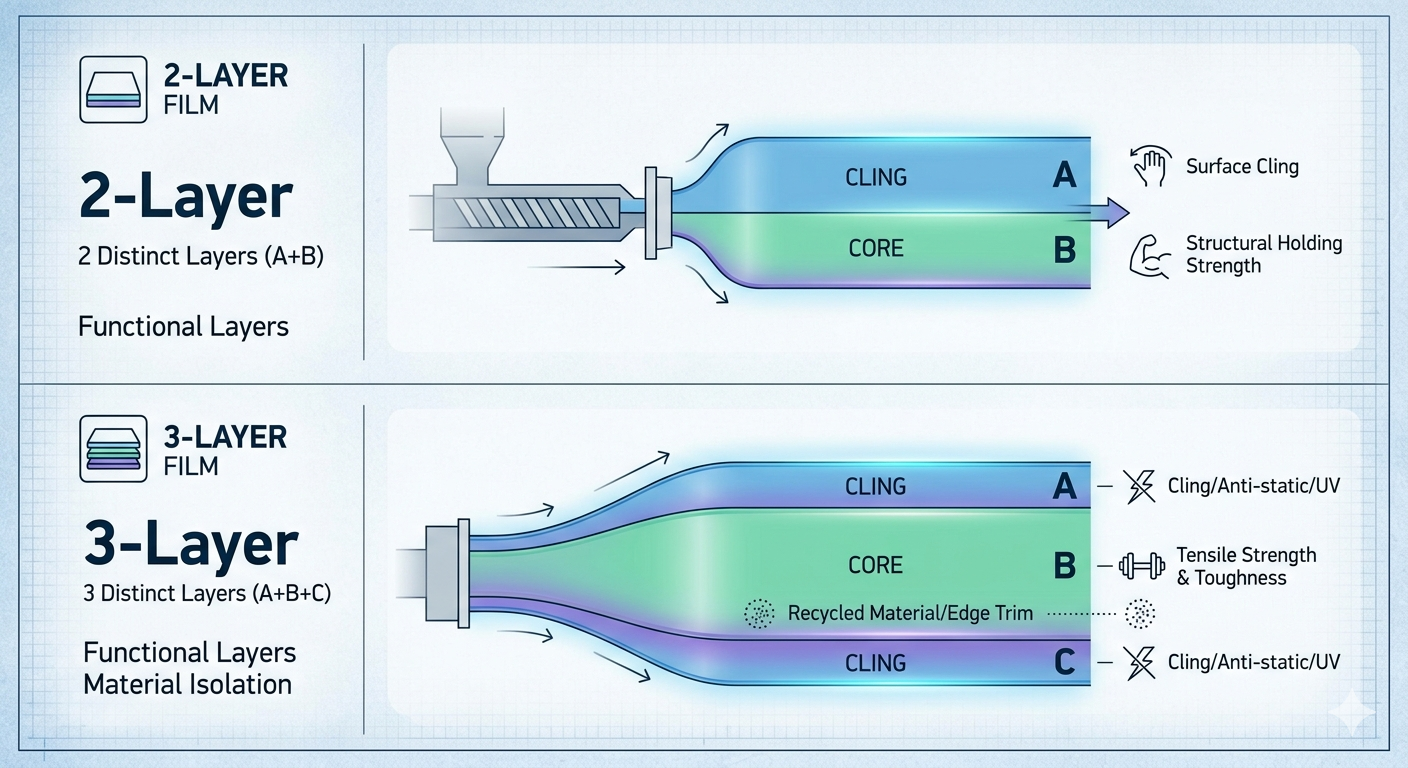
- 2-Layer Structure Equipment: Typically consists of two extruders. After the raw plastic materials melt, they merge at the die head and are pressed out. The cross-section of the final stretch film consists of two distinct layers.
- 3-Layer Structure Equipment: Usually consists of three extruders (or two extruders paired with a 3-layer distributor). Once the plastics are melted, the resulting stretch film features a sandwich-like three-layer structure.
Film Layer Arrangement
- 2-Layer Structure: The film consists strictly of an A-layer and a B-layer. This setup typically allocates surface cling properties to one side and structural holding strength to the other.
- 3-Layer Structure: The film is composed of A, B, and C layers. The middle layer (B-layer) is completely enclosed and isolated in the center, while the outer and inner surfaces function as independent A and C layers.
Performance Distribution and Material Matching
- 2-Layer Structure: Performance traits like stretchability, tackiness, and puncture resistance are shared across the two layers. This means a single layer is often tasked with carrying multiple properties simultaneously.
- 3-Layer Structure: Different properties can be completely separated and assigned to different layers. The middle core layer specializes exclusively in providing tensile strength and toughness, while the outer and inner layers are utilized to provide surface functions like cling, anti-static, or UV resistance.
Application of Recycled Materials
- 2-Layer Structure: When adding industrial regrind or post-consumer recycled materials, the recycled content directly reaches the surface of the film, which influences the tactile surface cling and visual transparency.
- 3-Layer Structure: Recycled content or edge trim can be concentrated entirely in the hidden middle core layer. This allows the machine to process recycled materials without altering the visual clarity or the external stickiness of the outer skins.