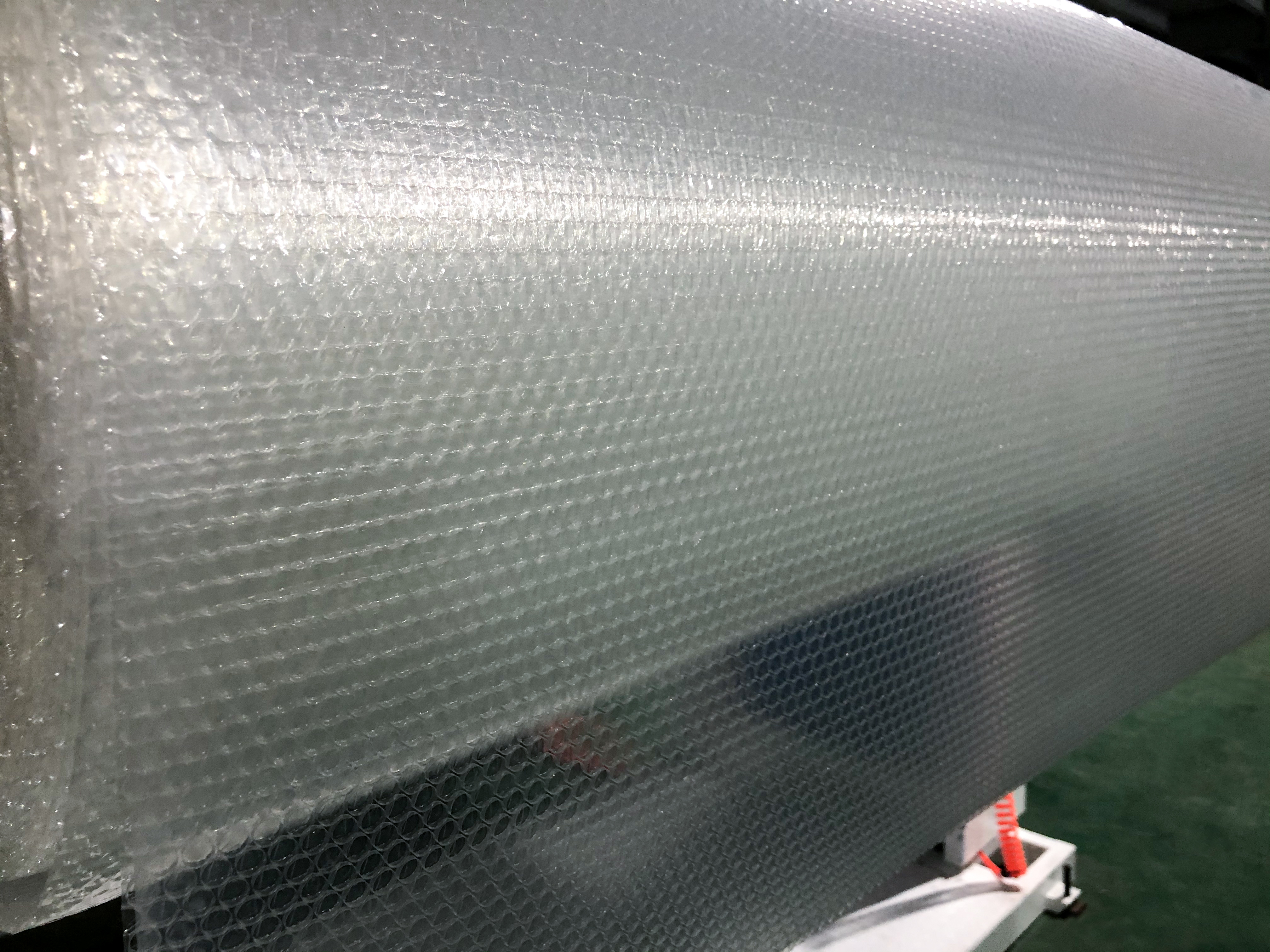
Key Engineering Principles for High-Performance Bubble Film Machines
High-performance bubble film production relies on more than theoretical machine specifications. Consistent output, high-quality film, and efficient material use depend on the precise integration of core engineering factors. Four critical pillars define reliable performance in modern bubble film lines:
1. Screw Diameter: Core of Volumetric Throughput
The extrusion screw functions as both a polymer conveyor and a precision pump, controlling the rhythm of the entire production line. Scaling from 1600 mm to 3000 mm lines requires increasing screw diameter from 75 mm to 95 mm. This adjustment enhances resin volume and improves melt thermodynamics.
A deep-channel screw design maintains lower melt temperatures even at 25% higher throughput. This prevents bubble collapse in wide-format production and preserves optical clarity, reducing material waste and improving overall film performance.
2. Motor Power: Stable Torque for Continuous Operation
Motor performance is determined not only by power rating but also by drivetrain design. AC frequency conversion motors provide stable torque and maintain ±0.5% synchronization between screw rotation and winding tension.
Even during sudden changes in resin formulation or extended eight-hour production runs, torque retention remains above 98%, preventing thickness variations and ensuring consistent film quality.
3. Thermal Management: Optimized Heating and Cooling
Precise thermal control is essential for high-speed extrusion and bubble integrity. Optimized heating elements and calibrated cooling zones allow processing of lower-density resins, reducing material costs by 8–12% without compromising protective performance.
Effective thermal management also enables higher line speeds, ensuring consistent film thickness and mechanical properties across wide and multi-layer lines.
4. Structural Integrity: Precision Through Stability
Large bubble film machines, such as 3000 mm lines, weigh over 14 metric tons. A monolithic base frame with advanced vibration analysis maintains roller parallelism within 0.03 mm across the entire film width.
This structural precision eliminates subtle thickness variations, reducing material waste by 3–7% compared with lighter, less stable machines. Strategically engineered mass ensures reliable extrusion and consistent film quality.
Integrated System Performance
High-output bubble film production depends on the interaction of these four systems. Screw design, motor torque, thermal management, and structural stability must operate as an integrated system. Proper balance delivers consistent output, high-quality film, and efficient material use across varying resin batches.
Reliable engineering of these core factors distinguishes real-world performance from theoretical specifications, ensuring reproducible, high-quality bubble film production.