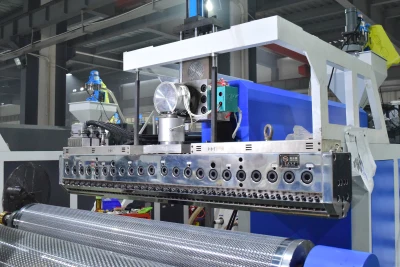
When sourcing materials for high-precision extrusion systems, material selection plays a critical role in determining production stability, product quality, and long-term operational performance. P20H/1.2311 steel is widely used in precision extrusion T-die applications due to its balanced mechanical properties and good machining stability.
The material is typically supplied in a pre-hardened condition in the range of approximately 28–34 HRC. This pre-hardened state reduces the need for post-machining heat treatment and helps minimize the risk of distortion during precision machining. As a result, it supports more predictable machining performance and improved dimensional consistency in finished die components.
P20H/1.2311 steel also features a relatively uniform microstructure, which enables it to achieve a high level of surface finish through polishing. In practical applications, surface roughness values in the range of Ra 0.05–0.1 µm can typically be achieved, depending on machining and polishing processes. A smoother flow channel surface helps reduce flow resistance and contributes to more stable polymer flow behavior, improving the consistency of extruded products.
In terms of durability, the alloy composition provides good wear resistance under typical polymer processing conditions. It is suitable for processing standard polyethylene and polypropylene materials, including formulations with moderate filler content. However, its corrosion resistance is limited compared to stainless tool steels, and appropriate material selection should be considered when processing highly corrosive polymers or additives.
From an application perspective, P20H/1.2311 steel offers a balance between performance, machinability, and cost efficiency. It is commonly used in extrusion dies where high dimensional stability and reliable surface quality are required, while also maintaining reasonable production and maintenance costs.