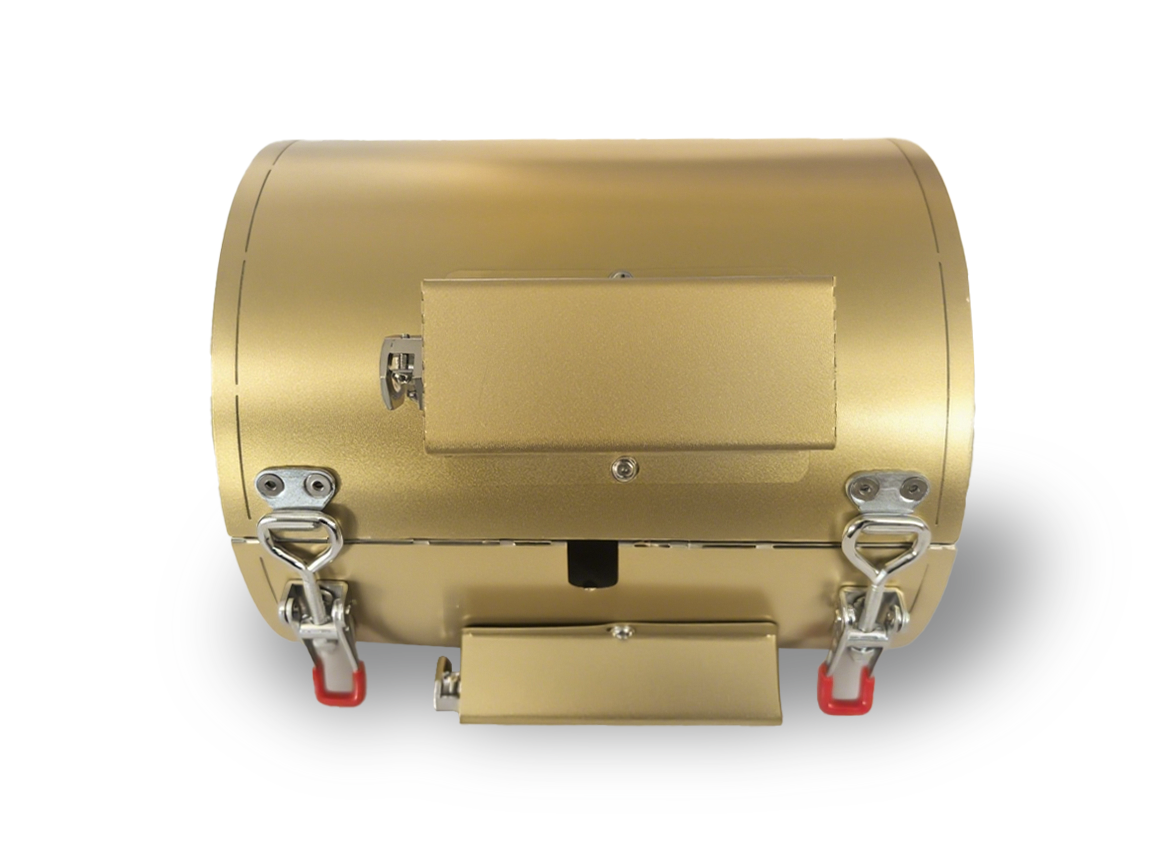
In stretch film and bubble film machines, the heating system is a key component of the extrusion process. It directly affects melt quality, temperature uniformity, and overall film performance. Infrared heating provides rapid, precise, and stable heat, ensuring consistent production conditions and high-quality film output.
Infrared heating works by transferring thermal energy directly to the material and extrusion components. Compared with conventional resistive heaters, it delivers faster response times and more uniform heat distribution. This enables the extrusion head and die to maintain a stable temperature profile, supporting smooth melt flow and reducing the risk of defects such as uneven thickness, bubbles, or weak spots in the film.
In multi-layer machines—such as 3-layer and 5-layer stretch film machines or 7-layer bubble film machines—accurate temperature control is essential. Uniform heating ensures proper adhesion between layers, consistent thickness, and a reliable multi-layer structure. This contributes to stable mechanical properties, improved tensile strength, and superior film performance.
Infrared systems are highly energy-efficient and respond quickly to temperature adjustments. They allow rapid start-up, maintain thermal stability during continuous operation, and support precise control over each heating zone. This ensures reproducible production parameters and high-quality film output, even in complex multi-layer extrusion processes.
Additionally, infrared heating simplifies maintenance and improves process reliability. By providing consistent and localized heat, it minimizes thermal stress on components and reduces energy loss. The result is a more efficient, controllable, and reliable extrusion process for both stretch film and bubble film production.