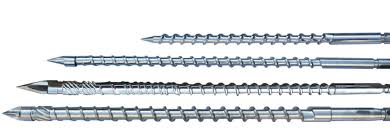
In the highly competitive arena of stretch film manufacturing, every component of your extrusion line must be precision engineered to ensure peak performance. Among these critical elements, screw diameter is a foundational design parameter that shapes your machine's capabilities. This is not just a measurement; it is the core component of the engine, directly impacting production capacity, melting efficiency, and the quality of the LLDPE film output. It is vital for businesses to understand the full impact of these changes if they are to optimise their investments and secure a competitive advantage.
Production Throughput: The Direct Impact of Screw Diameter
The most immediate and quantifiable effect of screw diameter is on production throughput. Please visualise this as the pipeline for your raw polymer resin. Larger-diameter screws (e.g., 100mm–150mm range) boast deeper flight depths and expanded surface areas, enabling them to convey substantially higher material volumes per revolution. For high-volume industrial lines that prioritise maximum output (kg/h), selecting a larger diameter delivers a direct pathway to enhanced productivity. Conversely, smaller diameters (65mm–80mm) are ideal for precision applications, such as producing secondary layers or addressing specialised, small-scale production needs, without incurring unnecessary capital or operational expenses.
Melt Quality: Achieving the Right Balance between Diameter and L/D Ratio
However, it is important to remember that raw output represents only half of the equation. The hallmark of a superior stretch film machine lies in the quality of its melt. In this case, the screw diameter is intricately linked to the length-to-diameter (L/D) ratio. Larger screws leverage their increased surface area to deliver superior conductive heating from the barrel while generating beneficial shear heat. However, achieving optimal performance requires precise calibration: if diameter growth does not align with proportional increases in length, resin residence time in the barrel may become inadequate. This imbalance can trigger incomplete melting, manifesting as undesirable "unmelts" or gels in the final film. Such defects directly compromise film clarity and, more crucially, compromise resistance, which is an essential attribute for ensuring secure pallet unitisation.
Film Performance: Stretchability, Cling and Strength
The diameter of the screw has a direct impact on key performance metrics of the core film, including stretchability, cling and strength. It is important to ensure that screws are the correct size to avoid inducing polymer degradation. For instance, oversized screws relative to target output may cause overheating through excessive residence time, breaking polymer chains and weakening the film. This degradation reduces the material's elasticity and increases the risk of tearing during application. Therefore, it is vital to select the correct diameter to ensure the consistency and reliability of your product's key differentiators.
Operational Efficiency: Costs and stability
Finally, the question of your operational costs and line stability is pivotal. Power requirements scale non-linearly with screw size; larger diameters require significantly more robust motors and drive systems to deliver the required torque, particularly when processing high-viscosity LLDPE grades. While this does increase the initial motor specifications, the result is enhanced operational stability. Larger screws provide enhanced thermal inertia, buffering against temperature fluctuations and fostering a more stable, consistent extrusion process at steady state. This enhanced stability reduces material waste, minimises adjustment downtime, and directly elevates Overall Equipment Effectiveness (OEE) and profitability.
Strategic Calibration for Market Success
In essence, screw diameter selection represents a strategic calibration between desired output, quality standards, and operational efficiency. This product serves as a technical leverage point, enabling customers to tailor their stretch film machines not only to specifications, but also to precise market demands and production objectives. Correctly establishing this foundation is the first step towards constructing a more productive, reliable and profitable extrusion line.