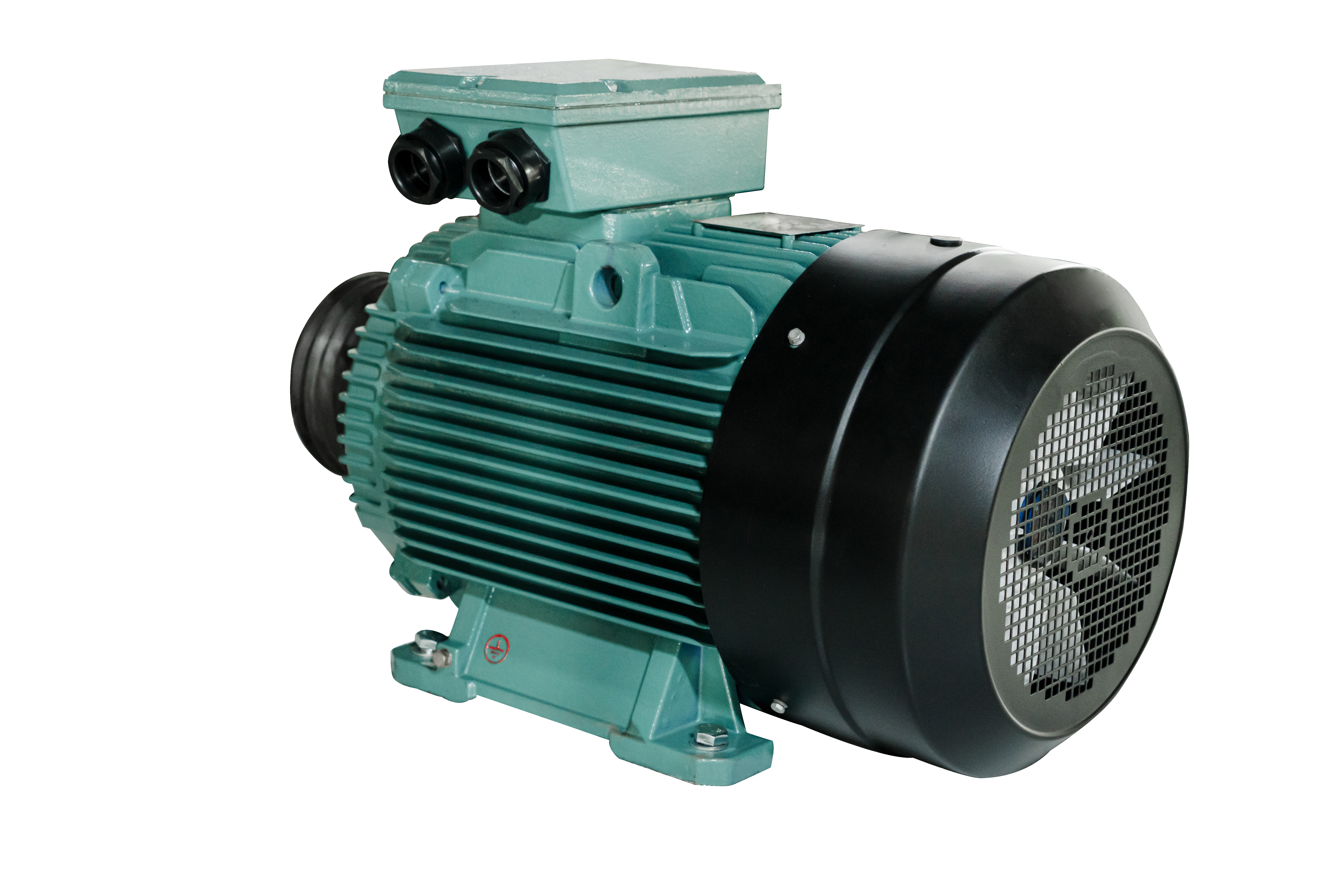
For procurement professionals, the dual-motor drive system is the foundation of the air bubble film machine. This system can directly improve productivity and film quality.
The main motor is the powerhouse of the entire production line. The primary extruder is driven by this mechanism, with the majority of the raw resin being processed. This motor must provide high torque to ensure effective melting of plastic and uniform distribution through the die, facilitating the formation of a consistent molten film on the vacuum forming roller. The vacuum then shapes the film into uniform protective air bubbles.This stretching process demands strong, reliable power. For this reason, the main motor is typically a high-performance variable-frequency drive (VFD) unit, enabling precise speed control to maintain a consistent bubble structure — even when material viscosity or line speed fluctuates. An underpowered or low-quality main motor will have a negative impact on the quality of the bubbles produced, resulting in a lower yield and unnecessary material waste.
The Auxiliary Motor is renowned for its precision and finesse. It drives a secondary extruder to produce the flat, smooth cap layer. Its function is not to deliver high power, but rather to ensure stable and accurate film feeding. As the bubble layer exits the forming roller, the cap layer is fed into position. While both layers are still molten, they are bonded together through precision heat lamination. It is imperative that there is perfect synchronisation between the auxiliary motor and the main motor. Even a minor discrepancy in speed can result in weak sealing, deflated bubbles or surface wrinkles, which can render the film unmarketable.
A premium dual-motor system integrates strong extrusion performance with delicate lamination accuracy, enabling higher production speeds and lower defect rates.