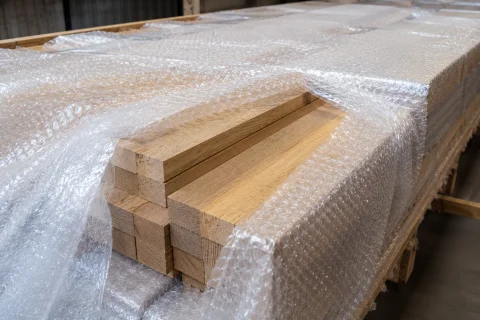
Heavy-duty industrial wood packaging requires high-performance surface protection. Standard single-layer bubble wraps frequently fail during cross-border freight due to prolonged mechanical stress, leading to premature deflation, moisture infiltration, and surface scratching. Advanced multi-layer bubble film manufacturing machines solve these transit challenges by producing engineered protective films tailored for high-end wooden furniture, heavy engineered timber panels, and delicate decorative veneers. Integrating precision extrusion technology directly into the packaging workflow ensures that processed timber remains structurally stable and aesthetically flawless from the factory floor to the final destination.
Multi-Layer Co-Extrusion Technology for Advanced Timber Protection
Modern bubble film extrusion lines utilize advanced multi-layer co-extrusion technology to engineer high-strength, puncture-resistant packaging materials. By simultaneously layering up to seven distinct polymer formulations into a single cohesive web, these manufacturing machines produce a resilient protective barrier that retains its cushioning profile under heavy, continuous compression. The 7-layer configuration delivers maximum air retention and impact resistance for heavy timber transport, while versatile 3-layer and 5-layer co-extrusion models optimize material costs while maintaining robust edge and corner protection across various wood packaging designs.
Key Technical Features and Functional Protective Benefits
The primary advantage of applying a dedicated bubble film manufacturing machine lies in its precise control over material properties. The outer polymer skin of the extruded film creates a high-strength vapor barrier that prevents structural warping, mold growth, and veneer delamination caused by humid transit docks. Simultaneously, integrated precision vacuum forming tools and automated thickness control systems ensure uniform bubble distribution and consistent gauge across the entire web width. This structural uniformity allows the internal trapped air cells to absorb heavy mechanical shocks and damp out high-frequency vibrations during transit, while heavy-duty tensioning systems guarantee a flat, stable laydown during automated wrapping processes.
Targeted Industrial Applications in the Wood Sector
Applying these advanced manufacturing lines allows facilities to customize bubble films for distinct sectors of the timber industry, where different wood species require specific thickness parameters and bubble configurations to preserve their integrity.
- High-End Wooden Furniture Protection: Solid wood components like mahogany dining tables require scratch-free shipping. A 5-layer or 7-layer co-extrusion setup creates a film with an ultra-smooth interior skin that cushions protruding corners without marking polished lacquers or reacting chemically with surface finishes.
- Engineered Panels and Decorative Veneers: Veneered doors and MDF are highly unstable when exposed to ambient moisture fluctuations. Implementing a 3-layer or 5-layer barrier film line isolates these sensitive timber products within a sealed micro-environment, completely blocking maritime humidity and preventing moisture-induced core swelling.
- Heavy Timber Crates and Pallet Over-Wrapping: Export pallets and heavy-duty shipping crates face intense friction from strapping and forklifts. High-gauge 7-layer bubble films provide the necessary puncture resistance and high-tensile strength to resist tearing against sharp wood splinters and rough timber edges.
- Prefabricated Wood Housing Components: Mass timber elements endure extended outdoor exposure on construction sites before assembly. A specialized UV-stabilized multi-layer bubble film with large cell diameters provides a dual-action shield against crane-assisted lifting shocks and torrential rainfall.
Optimized Production Scalability and Material Efficiency
Flexible machine configurations allow manufacturing plants to scale their film output precisely to match fluctuating wood production demands. High-speed extrusion lines maximize throughput for high-volume factories processing delicate doors, while medium-speed and low-speed systems offer versatile switching mechanisms to adjust bubble heights and layer counts on demand. Ultimately, investing in an automated bubble film manufacturing machine stabilizes operational costs by eliminating excessive manual over-packaging, directly reducing material waste and ensuring predictable, high-efficiency wood packaging workflows worldwide.