Difference Between Timing Belt and Ordinary Chain
2026-08-31
The transmission mechanism inside a film production line rarely gets the attention it deserves, yet it directly governs synchronization accuracy, product quality, and overall operational efficiency. Whether the line in question is a stretch film extrusion machine or a bubble film extrusion machine, two drive systems dominate the market: timing belts and chain drives. The two look similar from a distance, but their performance characteristics diverge in ways that show up unmistakably in the finished roll.
The Wear-and-Tear Problem Built Into Chain Drives
Chain drive systems have been a mainstay of industrial machinery for decades, largely because they are simple, familiar, and capable of handling heavy loads. That simplicity comes with a tradeoff that becomes more visible the longer a chain stays in service. Wear at each link, gradual elongation, and mechanical backlash accumulate over time, and once that cumulative error passes roughly half a millimeter, synchronization between drive points starts to drift in ways that are difficult to correct without a full chain replacement.
That drift does not stay contained to the mechanical system. On a stretch film line, uneven synchronization translates into inconsistent stretching ratios across the width of the film, which shows up as variable tensile strength and unpredictable cling performance from roll to roll. On a bubble film line, the same underlying vibration and timing inconsistency disturbs the precise coordination needed between extrusion speed and the vacuum forming process, often producing uneven bubble height or, in more visible cases, a faint ribbing pattern across the surface of the film.
Chain systems also demand a level of ongoing maintenance that timing belts simply do not require. Regular lubrication is necessary to control friction and slow wear, but that same lubricant introduces a contamination risk in an environment where stretch film and bubble film cleanliness directly affects product quality. Every maintenance interval adds labor cost and downtime, and skipping or delaying that maintenance only accelerates the wear the lubrication was meant to control in the first place.
Where Transmission Precision Actually Shows Up
These mechanical details matter because they surface in very specific ways once film reaches the customers who depend on it. In building material and profile packaging, stretch film needs to deliver even tension and full, uniform cling around irregular, often heavy loads like pipes, panels, or bundled steel profiles. A film produced on a chain-driven line with drifting synchronization tends to wrap with inconsistent tightness, and that inconsistency becomes a real problem during long-haul transport, where loose sections allow shifting, abrasion, or outright load separation before the shipment ever reaches its destination.
Household appliance and furniture packaging places a comparable demand on bubble film, though the failure mode looks different. These products need consistent bubble size and dependable cushioning strength across an entire roll, since a single section with thinner or unevenly formed bubbles becomes the weak point where an impact during handling turns into a dent, a crack, or a warranty claim. Vibration-induced inconsistency from a worn chain drive is exactly the kind of defect that stays invisible on the production floor and only becomes obvious once a damaged appliance arrives at a customer's door.
How Timing Belts Solve the Synchronization Problem
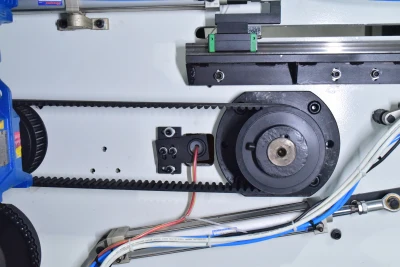
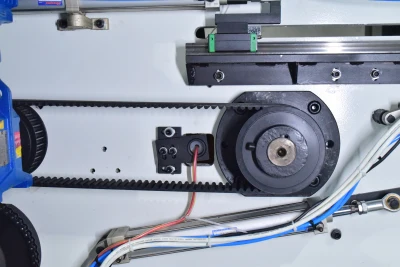
A timing belt system addresses these issues at the mechanical level rather than trying to compensate for them elsewhere in the process. The toothed profile of the belt engages precisely with matching pulleys, which eliminates the slippage that gradually degrades a chain's positional accuracy. That engagement stays consistent from the first day of operation through years of continuous use, since a timing belt does not stretch or develop backlash the way a chain link assembly does over time.
For a stretch film extrusion machine, that consistency means stretching ratios stay uniform across the full width of the film and from batch to batch, which is exactly what building material and profile packaging customers need to get a tight, dependable wrap on irregular loads. For a bubble film extrusion machine, the same precision keeps the timing between extrusion output and the vacuum forming rollers locked in step, which produces uniform bubble height and consistent wall thickness, the qualities that give household appliance and furniture packaging its reliable cushioning performance.
Timing belts also eliminate the maintenance burden that chain drives carry. Because the belt requires no lubrication, there is no ongoing risk of oil or grease contaminating the film surface, and maintenance schedules become simpler and less frequent. Operating noise drops as well, typically staying below 65 decibels, which contributes to a quieter, more stable production environment and reduces the vibration that would otherwise transfer into the film itself. The combined effect is a smoother, more uniform roll with fewer surface defects, whether the product coming off the line is stretch film or bubble film.
Matching the Drive System to the Application
None of this means chain drives have disappeared from stretch film and bubble film manufacturing entirely, and for good reason. In certain heavy-duty applications, or in cost-sensitive production setups where the highest tier of precision is not the primary concern, a well-maintained chain drive can still deliver acceptable results at a lower upfront cost. The limitation only becomes a genuine liability in high-precision production environments, where customers expect tight tolerances on cling force, tensile strength, bubble uniformity, or cushioning consistency, and where even a small synchronization error compounds into rejected rolls and dissatisfied buyers.
For manufacturers producing film that needs to perform reliably under real shipping and handling conditions, the choice becomes straightforward. A timing belt system delivers the precision, cleanliness, and consistency that both stretch film and bubble film production depend on, without the wear-driven drift and contamination risk that come standard with a chain-driven setup.
Built for Precision From the Drive System Up
Precision transmission is not a detail we treat as optional. Our stretch film extrusion machines and bubble film extrusion machines are engineered around timing belt drive systems specifically because the applications our customers rely on, from building material and profile packaging to household appliance and furniture protection, cannot tolerate the drift, vibration, and contamination risk that chain drives introduce over time. Choosing the right transmission mechanism at the design stage is what allows both machine lines to hold tight synchronization roll after roll, year after year, rather than requiring customers to compensate for mechanical wear further down the production process. If your current equipment is showing the kind of surface defects or inconsistent tension that point back to an aging chain drive, upgrading to timing belt-driven stretch film or bubble film extrusion equipment is one of the most direct ways to restore the precision your production line was originally built to deliver.