Difference Between Timing Belt and Ordinary Chain
In film manufacturing systems, the choice of transmission mechanism directly affects synchronization accuracy, product quality, and operational efficiency. Two commonly used drive systems—timing belts and chain drives—offer distinct performance characteristics that influence overall production outcomes.
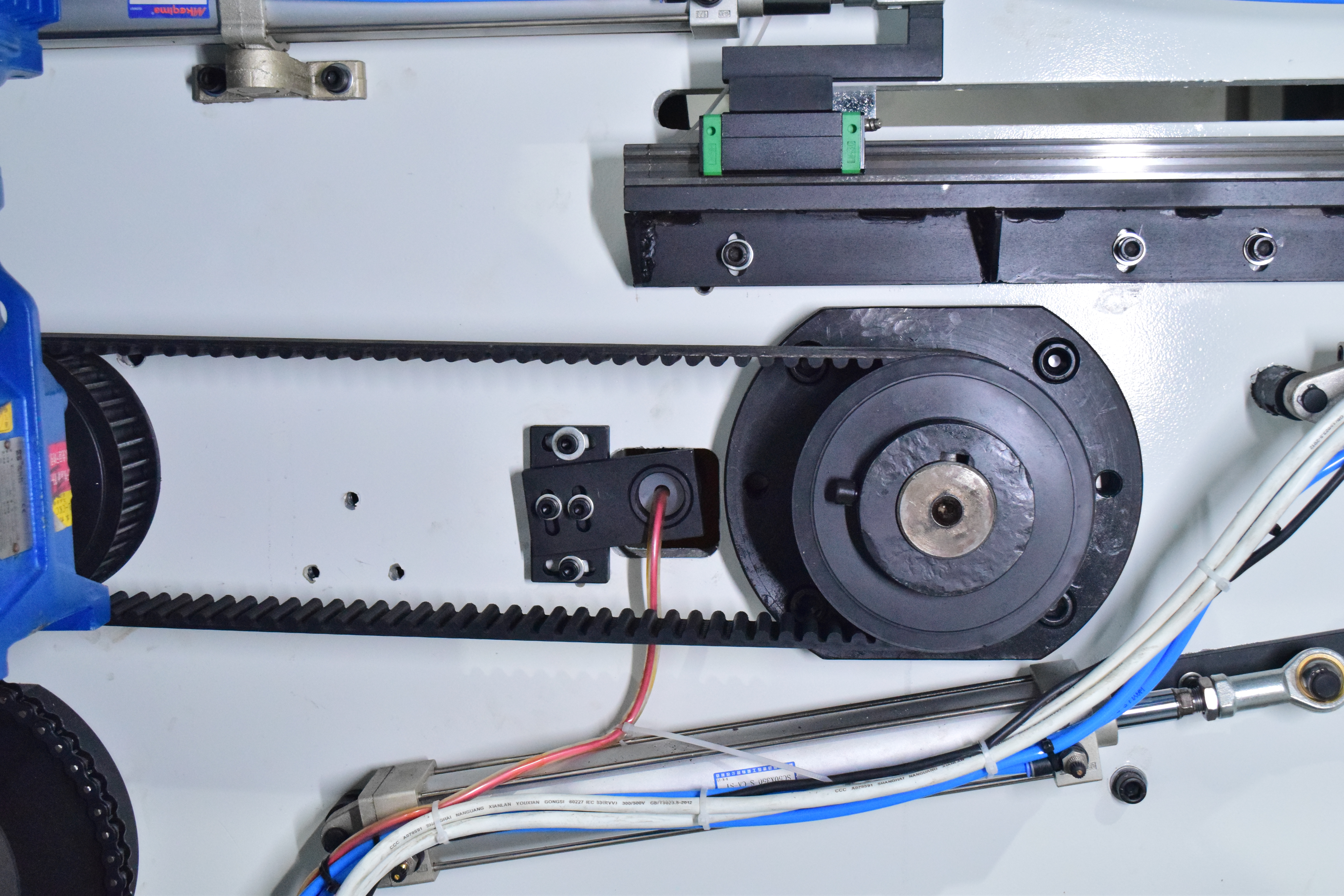
A timing belt system provides precise, zero-error transmission synchronization. Its toothed structure ensures consistent engagement with pulleys, eliminating slippage and maintaining exact positional accuracy throughout operation. This level of precision is critical in film production, where even minor deviations can impact film uniformity. Additionally, timing belts operate without the need for lubrication, significantly reducing maintenance requirements and avoiding contamination risks. With operating noise levels below 65 dB, they also contribute to a quieter and more stable production environment. As a result, film rolls produced using timing belt systems are typically smooth, uniform, and free of surface defects.
In contrast, chain drive systems are subject to cumulative errors exceeding 0.5 mm over time due to wear, elongation, and mechanical backlash. These inaccuracies can lead to inconsistent synchronization, negatively affecting the stability of the production process. Chain systems require regular lubrication to minimize friction and wear, increasing maintenance demands and the risk of lubricant contamination. Furthermore, the inherent vibration generated during chain operation can transfer to the film material, often resulting in surface defects such as convex ribs on the membrane roll. These imperfections reduce product quality and may lead to higher rejection rates.
From a technical standpoint, timing belts offer clear advantages in precision, cleanliness, noise control, and product consistency. While chain drives may still be used in certain heavy-duty or cost-sensitive applications, their limitations in high-precision film production environments make timing belts the preferred solution for achieving superior film quality and reliable performance.