Cast vs Blown Extrusion: Which Is Better for Bubble Film Extrusion Machine?
2026-08-17
The extrusion technology used in bubble film manufacturing directly influences film quality, production efficiency, and long-term profitability. As global packaging industries continue to develop, manufacturers are facing increasing pressure to produce protective films with better transparency, stronger cushioning performance, more stable dimensions, and lower material consumption. Traditional production methods that were once sufficient for standard packaging applications are now struggling to meet the requirements of high-volume and high-quality bubble film production.
For many years, blown extrusion technology has been commonly used in plastic film manufacturing. However, when applied to modern bubble film production, its limitations in cooling efficiency, thickness control, and production speed have become increasingly noticeable. Manufacturers serving industries such as export packaging, e-commerce logistics, electronics protection, and industrial transportation require more advanced solutions that can provide consistent quality under continuous production conditions.
A cast bubble film extrusion machine uses advanced T-die technology, precision cooling systems, and optimized extrusion structures to overcome these challenges. Compared with traditional blown extrusion methods, cast extrusion provides better control over the film-forming process, allowing manufacturers to achieve higher productivity and more stable bubble film quality.
The Growing Role of Bubble Film in the Protective Packaging Industry
Bubble film has become one of the most important lightweight protective packaging materials in modern supply chains. Its unique cushioning structure allows it to absorb external impact and protect products from scratches, vibration, and transportation damage. From fragile consumer goods to large industrial components, bubble film provides a practical packaging solution that combines protection, flexibility, and cost efficiency.
The increasing demand for online shopping, international transportation, and export packaging has created higher expectations for bubble film manufacturers. Customers are no longer only focused on basic cushioning performance. They also require packaging materials with improved appearance, stable bubble structures, consistent thickness, and environmentally responsible production characteristics.
In industries such as electronic product packaging, automotive parts transportation, furniture protection, and precision equipment logistics, film quality directly affects product safety during transportation. Uneven bubble formation or inconsistent film thickness may reduce cushioning performance and increase the risk of packaging failure. Therefore, manufacturers need a bubble film extrusion machine that can maintain stable output while meeting increasingly strict quality standards.
Challenges of Traditional Blown Extrusion Technology for Bubble Film Production
Although blown extrusion technology has a long history in plastic film manufacturing, its working principle creates several limitations when manufacturers require higher production efficiency and improved film quality.
One major challenge is the limited cooling efficiency of the blown film process. During blown extrusion, molten polymer is expanded vertically into a bubble shape and cooled through surrounding air circulation. Compared with direct contact cooling methods, air cooling has a lower heat transfer rate, which restricts production speed. When operators attempt to increase output, the instability of the film bubble may lead to thickness fluctuations, uneven cooling, and reduced product consistency.
Another important limitation is thickness control. Because the blown film bubble is suspended in the air during formation, it can be affected by environmental conditions such as airflow changes and temperature variations. These factors may create uneven thickness distribution across the film width, resulting in inconsistent bubble sizes and unstable cushioning performance. For manufacturers producing high-quality protective packaging, maintaining precise film dimensions is essential because even small variations can increase material consumption and affect final product reliability.
Film appearance is another area where blown extrusion may have limitations. The slower cooling process allows polymer molecules more time to form crystalline structures, which can reduce transparency and surface gloss. For premium packaging applications where visual appearance is important, lower clarity can influence the overall quality perception of the packaged product.
Why Cast Extrusion Technology Provides Better Performance for Bubble Film Manufacturing
Cast extrusion technology offers a different approach by controlling the film formation process through a flat T-die and precision cooling system. Instead of forming a free-standing bubble that depends on air cooling stability, the molten polymer is evenly distributed through the T-die and immediately transferred onto a controlled chill roll surface.
This direct cooling method significantly improves heat transfer efficiency and allows the polymer structure to be stabilized quickly. As a result, manufacturers can achieve bubble film with better transparency, higher gloss, and more consistent physical properties.
A modern bubble film extrusion machine based on cast technology can be configured with different layer structures according to production requirements. Two-layer systems are suitable for standard protective packaging applications, while three-layer and five-layer configurations provide improved strength and functional flexibility. For manufacturers targeting advanced industrial packaging markets, seven-layer co-extrusion technology allows multiple materials to be combined within one film structure, creating higher-performance packaging solutions.
Advanced T-Die and Cooling Systems Improve Film Quality
The T-die is one of the key components that determines the quality of cast bubble film production. A precision-designed T-die ensures uniform polymer distribution across the entire film width, reducing thickness variation and improving overall film stability.
After leaving the die, the molten polymer directly contacts the high-efficiency chill roll, where rapid cooling takes place. This controlled cooling process helps maintain the desired molecular structure of the polymer and improves optical properties. Compared with traditional air cooling, chill roll technology provides more predictable production conditions, which is especially valuable for high-speed manufacturing environments.
With accurate extrusion control, modern cast bubble film extrusion machines can maintain thickness tolerances typically within approximately ±2% to ±5%, depending on material characteristics and machine configuration. Better thickness consistency reduces unnecessary material usage, improves roll quality, and helps manufacturers achieve more stable production costs.
Multi-Layer Co-Extrusion Technology for High-Performance Packaging
The development of multi-layer co-extrusion technology has further expanded the application range of bubble film. Instead of relying on a single polymer layer, advanced machines can combine different materials to achieve specific performance requirements.
A seven-layer bubble film extrusion machine can independently control each layer to optimize strength, flexibility, sealing performance, and material utilization. For example, outer layers can focus on surface appearance and durability, while inner layers can incorporate recycled materials without affecting the overall performance of the film.
This approach is becoming increasingly important as packaging manufacturers look for sustainable production methods. Through advanced feeding systems, precise melt control, and optimized screw designs, modern extrusion equipment can process suitable recycled materials while maintaining stable film quality.
Production Advantages of Using Cast Bubble Film Extrusion Machines
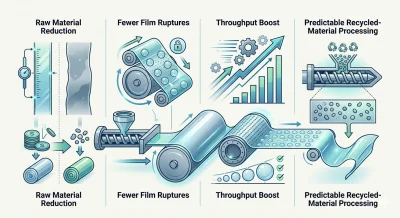
The shift from traditional blown extrusion to cast extrusion technology provides measurable benefits for manufacturers. Improved thickness control reduces material waste caused by uneven film distribution, helping companies lower production costs while maintaining product quality.
The stable extrusion process also reduces film defects such as bubble deformation, uneven cushioning, and production interruptions. Higher process stability allows manufacturers to operate continuously with fewer adjustments, improving overall equipment utilization.
In addition, the higher production capability of cast systems enables manufacturers to increase output while maintaining consistent bubble dimensions. This is particularly valuable for large-scale packaging producers that need reliable supply capacity for international customers.
Selecting the Right Bubble Film Extrusion Machine for Different Applications
Different packaging markets require different production solutions. Manufacturers producing conventional protective packaging may choose a two-layer bubble film extrusion machine for efficient and economical production. This configuration provides stable operation and meets the needs of many standard packaging applications.
For companies requiring stronger film performance and greater product flexibility, three-layer or five-layer systems provide additional advantages through multi-material structures. These machines are suitable for applications where higher strength, improved sealing performance, or customized film properties are required.
For high-volume manufacturers and companies serving demanding industrial markets, seven-layer high-speed bubble film extrusion machines offer advanced production capabilities. Through precise layer control and flexible material combinations, these systems help manufacturers develop premium bubble film products for specialized packaging requirements.
Improve Manufacturing Efficiency with Advanced Cast Bubble Film Extrusion Technology
The comparison between cast and blown extrusion shows that modern packaging production requires more precise, efficient, and reliable manufacturing solutions. While blown extrusion remains suitable for some traditional applications, cast extrusion technology provides clear advantages in production speed, thickness control, transparency, and material efficiency.
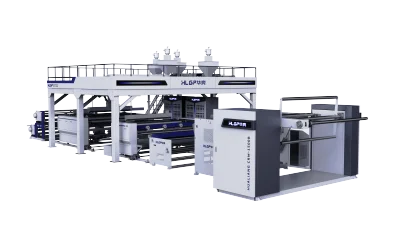
Our bubble film extrusion machine solutions are developed to help manufacturers achieve stable, high-quality production for today’s competitive packaging market. With advanced T-die technology, efficient cooling systems, multi-layer co-extrusion capabilities, and reliable automation control, our machines support a wide range of applications from standard protective packaging to high-performance industrial solutions. By investing in advanced bubble film extrusion machine technology, manufacturers can improve production efficiency, reduce material waste, and build stronger competitiveness in the global packaging industry.