Precautions for Using a 7-Layer High-Speed Bubble Film Machine
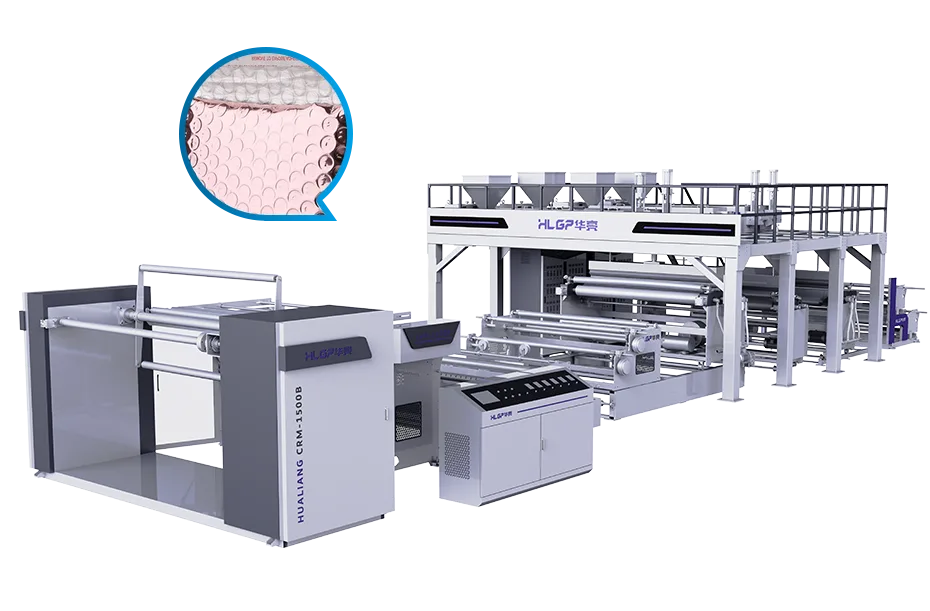
Investing in a state-of-the-art 7-layer high-speed bubble film machine is a strategic move to strengthen your position in the protective packaging industry. However, its advanced co-extrusion system and high-output operation require precise handling to ensure stable performance, consistent product quality, and long-term equipment reliability. For procurement specialists and production managers, following key operational precautions is essential not only for maintenance but also for maximizing ROI and ensuring production continuity.
First and foremost, proper material preparation and inspection are essential. The machine relies on precise multi-layer polymer co-extrusion, making raw material quality critical. Always use resins that meet specified requirements for melt flow index, moisture content, and purity. Contaminated or inconsistent materials may lead to unstable layer bonding, bubble formation defects, nozzle blockage, and reduced film performance. A strict raw material quality control process should be implemented before feeding materials into the hopper.
Secondly, controlled thermal management is crucial during operation. During startup, avoid rapid heating of the extrusion barrels and die head. A gradual and staged temperature ramp-up helps prevent thermal stress on mechanical components and ensures stable polymer melting. During shutdown, follow a controlled cooling procedure to avoid sudden temperature changes that may affect die head alignment and long-term stability.
Furthermore, preventive maintenance is vital for continuous high-speed operation. Regularly inspect the bubble forming and air distribution system to ensure stable bubble formation and uniform film structure. Check nip roller alignment, surface condition, and tension control in the winding system to prevent wrinkles, uneven rolls, or tension instability. Lubricate mechanical transmission components such as chain drives and gearboxes using manufacturer-recommended lubricants to minimize wear and extend service life.
Operator training and safety management are equally important. Ensure all operators are fully trained on the human-machine interface (HMI), emergency stop procedures, and lockout-tagout (LOTO) safety protocols. High-temperature zones and moving mechanical parts require strict safety awareness. Operators should also be trained to monitor bubble stability, film thickness consistency, and surface quality as part of routine quality control, enabling early detection of process deviations.
In conclusion, a 7-layer high-speed bubble film machine is a highly efficient and advanced production system for modern packaging applications. By strictly following proper material handling procedures, thermal control standards, maintenance schedules, and safety protocols, manufacturers can significantly improve production stability, reduce downtime, and extend equipment lifespan. Proper operation ultimately transforms this advanced machine into a long-term, high-return production asset.