
News
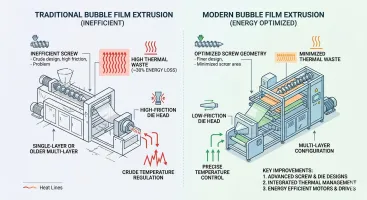
Energy Efficiency in Modern Bubble Film Extrusion Machine
Modern bubble film extrusion machines, from 2-layer low-speed to 7-layer high-speed models, achieve energy efficiency through optimized screw design, low-friction die heads, and advanced te
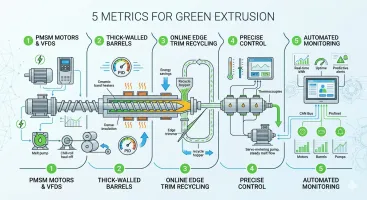
5 Energy-Saving Metrics to Check Before Buying a Green Stretch Film Extrusion Machine
When sourcing a green stretch film extrusion line, procurement experts must evaluate five critical energy-saving metrics: high-efficiency motors with variable frequency drives (VFDs), intelligent heating and cooling systems, online edge trim recycling, preci
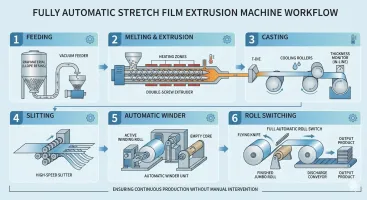
Workflow of a Fully Automatic Stretch Film Extrusion Machine: A Complete Guide
In the high-volume packaging industry, inconsistent film quality, manual roll changeover downtime, and material waste erode profit margins. The evolution from single-...
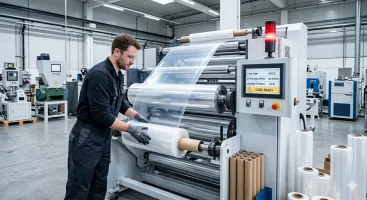
Operational Tips for Semi-Auto Stretch Film Extrusion Machine
Inconsistent film clarity, excessive downtime for maintenance, and suboptimal output quality plague many extrusion lines. Achieving reliable, high-grade production demands precision in daily...
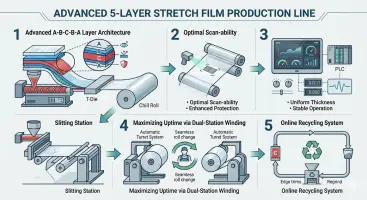
Advantages of 5-Layer Stretch Film Extrusion Machine
For industrial buyers, selecting stretch film machinery is a critical CAPEX decision plagued by trade-offs. Can you achieve superior puncture resistance without sacrificing clarity or stretch? Is consistent, bubble-free production possible without excessive material waste or downtime? The limitations of traditional monolayer or even 3-layer extruders create these very bottlenecks...
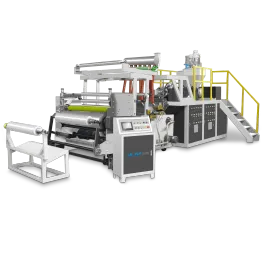
Key Differences Between 2-Layer and 7-Layer Stretch Film Machines
2-layer stretch film machines produce simple films with basic strength and elasticity using fewer materials and a simpler structure. 7-layer machines use advanced co-extrusion technology to combine multiple materials, offering higher strength, puncture resistance, cling, and barrier performance for demanding industrial packaging applications.
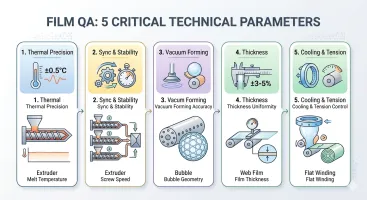
Quality Assurance: Testing Your Bubble Film Extrusion Machine Before Shipping
To ensure optimal performance and mitigate costly downtime, our pre-shipment commissioning for bubble film machines includes rigorous checks: melt temperature calibration (±0.5°C), screw speed stability, vacuum forming precision, uniform film thickness (±3-5% tolerance), and bubble stability via optimized air ring cooling and tension control systems...
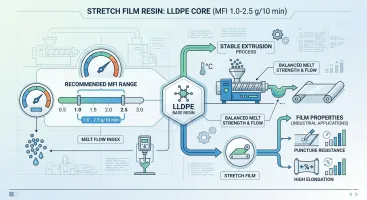
How to Choose the Right Raw Materials for Stretch Film Extrusion Machine
Choosing the right raw materials for a stretch film extrusion machine requires balancing stretchability, puncture resistance, cling performance, and process stability. LLDPE is the primary base resin, while mLLDPE improves strength and transparency. VLDPE, PIB, or EVA enhance tack and elasticity. Proper melt flow index, density selection, and multi-layer formulation optimize film quality, extrusion efficiency, and long-term wrapping performance.
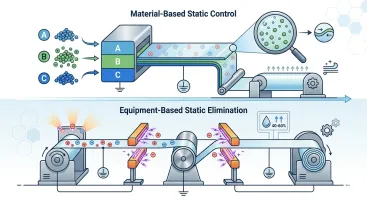
How to Solve Static Electricity Problems in Stretch Film Production
Static electricity in stretch film production can cause winding defects, safety hazards, and reduced yield. This article explores how combining antistatic masterbatches, ionizing bars, humidity control, and proper equipment grounding on 5-layer, 3-layer, 2-layer, semi-automatic, and fully automatic stretch film lines eliminates static issues for high-speed, safe operations.
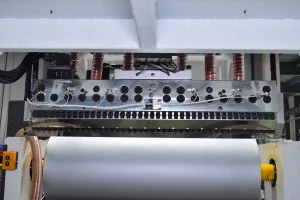
Differences Between High-Precision T-DIE and Traditional Ordinary T-DIE
The JC-TIMES high-precision T-DIE offers superior accuracy (±0.01mm), higher hardness (HRC ≥ 58), and better stability than ordinary T-Dies. It ensures uniform film thickness and wear resistance, while ordinary T-Dies with lower precision and hardness tend to cause uneven output and faster wear during production.