
Product Attribute

How Stretch Film Making Machine Draw Ratio Affects Film Puncture & Recovery
The mechanical draw ratio in stretch film making machines directly controls polymer orientation and crystallinity, balancing machine-direction strength with transverse integrity. Proper optimization enhances puncture resistance and elastic recovery, whi

Technical Parameters: Stability of 23000KG Heavy Duty Bubble Film Making Machine
Industrial-scale bubble film production demands unyielding stability. Our 23000KG heavy-duty extrusion system, engineered with a rigid steel chassis and precision-balanced rollers, eliminates gauge variation and vibration for flawless uniform bubble formatio

Bubble Film Making Machine Plasticization: 34:1 L/D Ratio Advantages
Unlock higher output speeds and exceptional bubble stability with our 34:1 L/D ratio plasticization system. This advanced technology extends polymer residence time, ensuring thorough melting and uniform plasti

Analysis of Energy Consumption Ratio (kWh/kg) for 2-Layer Bubble Film Making Machine
A detailed technical analysis of specific energy consumption (SEC) in 2-layer bubble film production, comparing high, medium, and low-speed machines. This guide explores how optimized energy ratios between 0.35–0.52 kWh/kg directly impact operational costs and sustainability for industrial buyers.

Die Width vs. Effective Film Width of 2-Layer Bubble Film Making Machine
A critical relationship between die width and final product width directly impacts efficiency, scrap rate, and ROI in 2-layer bubble film production. This technical brief dissects t...

Detailed Main Technical Parameters of Bubble Film Making Machine
Explore the advanced technical parameters of HLPE series bubble film machines. Engineered for precision and high-output production across speed grades...
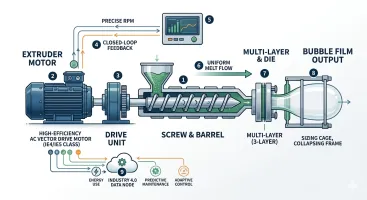
Technical Function of the Extruder Motor in Bubble Film Making Machine
In bubble film production, consistent quality and output are paramount. The extruder motor is the core power source driving this precision, directly impacting film uniformity, machine throughput, and operational costs. This technical analysis explores how...
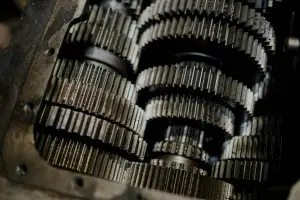
Key Factors Affecting Air Bubble Film Machine Production Speed
As a bubble film manufacturer, maximizing your production line's output is crucial. This in-depth technical analysis explains the four critical factors—extrusion capacity, cooling efficiency, material rheology, and automation—that dictate your machine's speed. Learn how advanced screw design, powerful vacuum systems, and perfect synchronization unlock higher yields and a better return on investment...
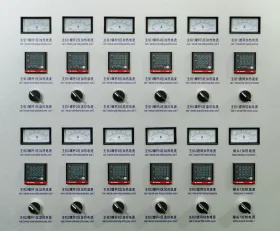
Air Bubble Film Machine Power Supply Usage Guidelines
When reviewing the technical specifications of an industrial bubble wrap machine, one of the most critical parameters is the power supply requirement, often written as 380V/3P/4W/50Hz. This is not merely a regional electrical standard...

The Influence of Machine Weight on Bubble Film Production
In plastic extrusion, the weight of a bubble film machine is a critical indicator of its engineering quality. As production scales, higher output demands heavier mechanical structures to maintain precision, durability, and consistent performance. This article explores the direct link between machine mass and production success...