
Technical Encyclopedia
Meaning of L/D Ratio in Stretch Film Machine Parameters
Discover how our specialized timing belt technology ensures flawless synchronization and power transmission in your stretch film manufacturing line, delivering unmatched precision, durability, and operational efficiency for consistent, high-quality output...

Why LDPE and LLDPE Are Used for Plastic Film Production
In the world of plastic film manufacturing, two polyethylene resins stand as the undisputed champions for creating high-performance films...
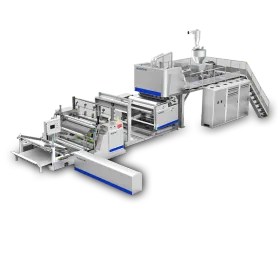
Differences Between Full-Automatic and Semi-Automatic Stretch Film Machines
In the fast-paced world of pallet packaging, the choice between fully automatic and semi-automatic stretch film machines can define your operational efficiency. Understanding the technological distinctions is crucial for making an informed investment that matches your volume needs, labor strategy, and long-term growth plans. This breakdown...
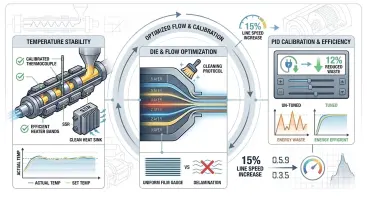
How to Maintain the Heating System of Stretch Film Making Machine for Better Efficiency
Efficient stretch film making machines rely on precise temperature control. Maintaining the heating system involves regular inspections of heater bands, thermocouples, and solid-state relays to prevent thermal fluctuations. Cleaning extrusion dies and calibrating PID...
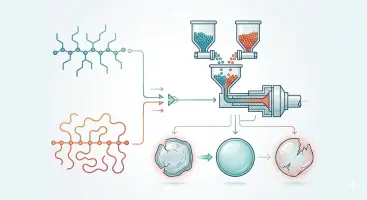
Optimizing LLDPE & LDPE Blending Ratios for Bubble Film Making Machine
In the competitive landscape of bubble film production, achieving optimal material blending is critical for maximizing output quality and reducing operational costs. This technical guide explores how fine-tuning the ratio of Linear Low-Density Polyethylene (LLDPE) to Low-Density Polyethylene (LDPE) directly impacts the performance of your bubble film making machine—whether it's a 2-Layer Low-Speed or a 7-Layer High-Speed system. By understanding the balance between processability and mechanical strength, manufacturers can produce film that meets the exacting demands of heavy-duty packaging while minimizing defects and downtime. Our approach emphasizes real-world benefits: enhanced puncture resistance, improved tensile strength, and superior bubble stability. This insight empowers procurement professionals to make data-driven decisions that yield a tangible return on investment, ensuring their equipment operates at peak efficiency in an increasingly demanding market. Discover how these blending techniques can transform your production line from a cost center into a competitive advantage.

Physical Impact of Screw L/D Ratio on Stretch Film Clarity
Explore how higher screw L/D ratios (30:1–33:1) enhance stretch film clarity, thickness uniformity, and melt homogeneity in 2-layer, 3-layer, and 5-layer film extrusion lines. Learn why this parameter drives production efficiency and ROI for global buyers.
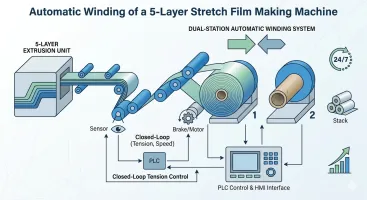
Automatic Winding of 5-Layer Stretch Film Making Machine
In high-volume manufacturing, inconsistent roll quality and downtime for roll changes are critical bottlenecks. Our 5-layer stretch film making machine's automatic winding system delivers precision and...
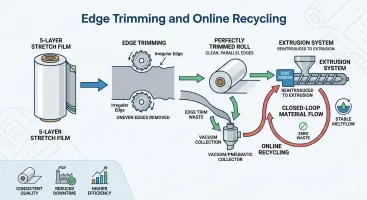
Edge Trimming and Online Recycling Functions of 5-Layer Stretch Film Making Machine
Integrating high-precision online edge trimming with instantaneous closed-loop material recycling, this system eliminates film waste and ensures flawless roll profiles. This technology directly translates to higher yield, consistent quality...

Advantages of Using PLA Raw Materials in Bubble Film Making Machine
Explore how integrating PLA raw materials into multi-layer bubble film machines delivers superior bubble clarity, energy savings, and...
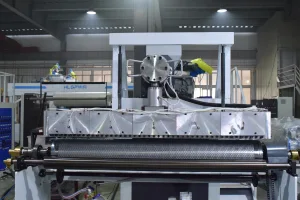
T-Die for Stretch Film Manufacturing Machine
As a core component in stretch film manufacturing machines, T-Die (T-type die) technology enables precise melt distribution and multi-layer co-extrusion, delivering breakthroughs in thickness uniformity, strength optimization, and functional customization for agricultural stretch films. This article explores its key technical advantages in farming applications...