
News
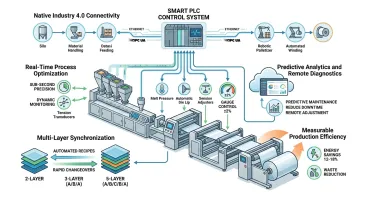
How Smart PLC Stretch Film Extrusion Machines Integrate into Automated Production Lines
Modern packaging lines demand zero downtime and perfect film consistency. Smart PLC-controlled 3-Layer, 5-Layer, and 2-Layer Stretch Film Machines solve integration challenges with real-
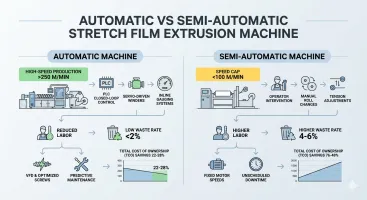
Automatic vs. Semi-Automatic Stretch Film Extrusion Machine: Long-Term Cost Comparison
In the competitive stretch film manufacturing landscape, procurement managers face a critical decision: invest in a fully automatic stretch film machine or opt for a semi-automatic stretch film extrusion line. The long-term cost implications extend far beyond the initial purchase price, encompassing labor, energy consumption, material efficiency, and maintenance planning. This article provides a data-driven analysis to guide B2B buyers toward the most cost-effective solution for their production scale.
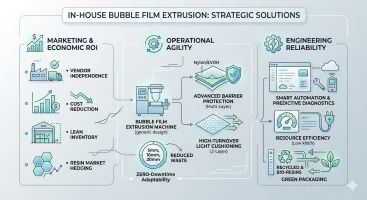
Bubble Film Extrusion Machine: Secure Your Factory's Supply Chain
In-house bubble film extrusion machines transform industrial packaging from a logistics bottleneck into a resilient asset. By converting raw resins into custom cushioning on-demand, factories bypass third-party supplier delays, volatile shipping costs, and inventory shortages. This strategic backward integration guarantees uninterrupted production and absolute supply chain sovereignty.
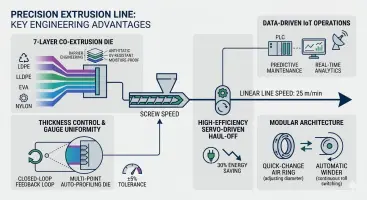
Why Global Distributors Prefer China-Made Bubble Film Extrusion Machine
Global distributors increasingly turn to China-made bubble film extrusion machines for their advanced co-extrusion technology, factory-direct pricing, and scalable capacity. These multi-layer machines deliver European-level precision and energy efficiency at significantly reduced capital costs, reshaping the packaging supply chain.
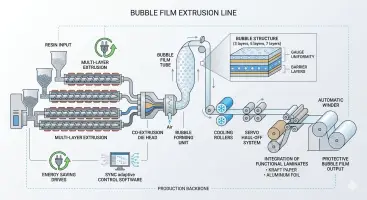
Wholesale Bubble Film Extrusion Machine: Direct Factory Price from China
China’s direct-factory bubble film extrusion machines deliver unbeatable pricing and high-efficiency multilayer film production. With precise gauge control, energy-saving design, and robust bubble strength, manufacturers can cut costs, increase output, and secure premium protective film quality—all with reliable, factory-direct delivery.
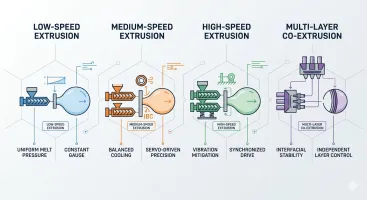
How Bubble Film Extrusion Machine Stability Directly Impacts Film Quality
Machine stability regulates polymer melt pressure and cooling rates during extrusion. Variations in motor speed or heating zones cause gauge fluctuations and weak bubble structures. Stable operation ensures consistent tensile strength, uniform thickness, and optimal air retention, directly preventing defects like wrinkling, thin spots, or premature popping in the final film.
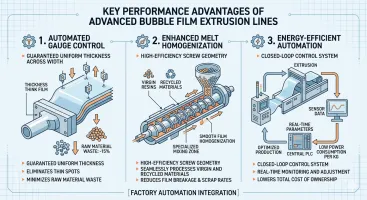
Why China Bubble Film Extrusion Machine Offer the Best Balance of Quality and Price
Global packaging buyers often face a dilemma: achieving high tensile strength and uniform gauge distribution without inflating capital expenditures. China’s advanced bubble film extrusion machines—from 2-layer low-speed to 7-layer high-speed—resolve this tension through multi-layer co-extrusion technology and automated T-die control, ensuring superior cost-performance for B2B purchasers.
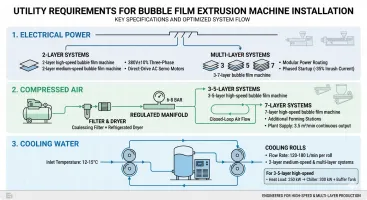
Utility Requirements for Bubble Film Extrusion Machine Installation: Water, Air, and Power
Successful deployment of an air bubble film extrusion line requires strict compliance with foundational infrastructure specifications. Pre-installation setup must secure stable three-phase electrical power for intense polymer melting, precise pneumatic
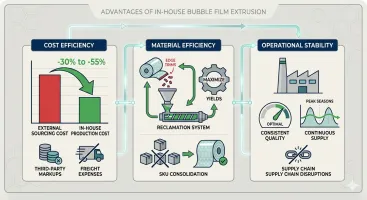
Why High-Volume Packaging Manufacturers Should Shift to In-House Bubble Film Extrusion Machine
High-volume packaging manufacturers benefit from in-house bubble film extrusion by reducing material costs, ensuring consistent film quality, and improving supply chain reliability. Advanced machines allow precise gauge control, customizable bubble sizes, and multilayer structures, optimizing cushioning performance while minimizing waste, downtime, and dependence on external suppliers.
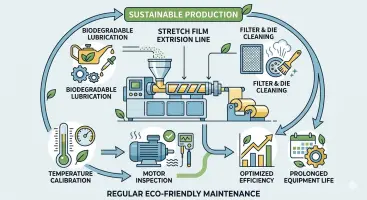
Eco-Friendly Maintenance to Maximize Stretch Film Extrusion Machine Efficiency
Regular eco-friendly maintenance of stretch film extrusion machines enhances operational efficiency and prolongs equipment life. Key practices include timely lubrication with biodegradable oils, filter and die cleaning, precise temperature c